Upavishta Konasana (Open Angle - Sitting): A Beginner-Friendly Guide
Introduction
Upavishta Konasana, also known as the Open Angle Sitting Pose, is a gentle seated yoga posture that opens your legs wide and encourages a calm, conscious stretch throughout the body.
In Sanskrit, Upavishta means "seated" and Kona means "angle"—so quite literally, this is the seated angle pose. The essential energy of this asana is calming and grounding.
If you’ve ever felt stiff after sitting too long at your desk or struggled with tight legs, Upavishta Konasana could quickly become your new best friend. It helps you reclaim mobility and ease in your hips and hamstrings—no advanced skills required!
Step-by-Step Guide
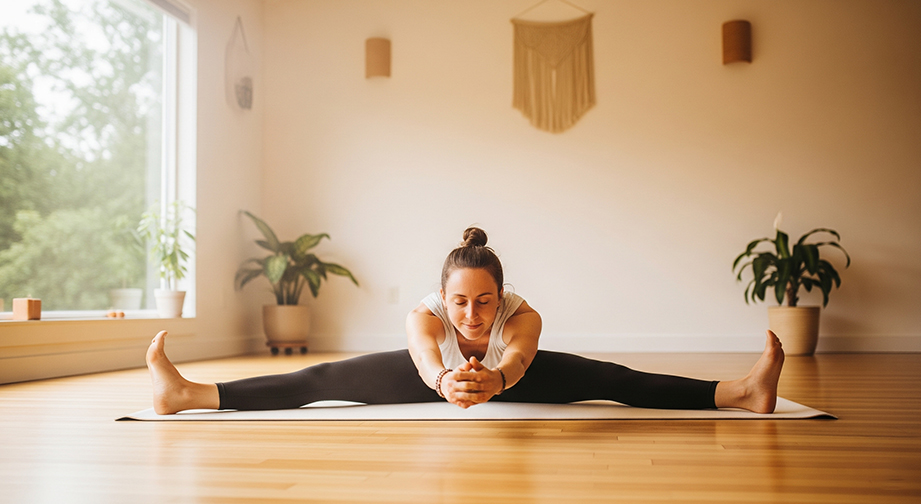
- Sit on your mat. Find a comfortable seat, legs extended forward. If your hips are tight, sit on a folded blanket.
- Open your legs wide. Gently separate your feet, bringing them as wide apart as is comfortable. Flex your toes upwards towards the ceiling.
- Ground your sit bones. Wiggle side to side to anchor your sitting bones into the mat. Keep your spine tall.
- Inhale: Lengthen through your spine, reaching the crown of your head upward.
- Exhale: Begin to hinge forward from your hips (not your waist), keeping your back as long as possible. Place your hands in front—on the floor, blocks, or hold your legs.
- Breathe deeply. With every inhale, feel your spine grow longer; with every exhale, allow your body to surrender a little more (only as far as is comfortable!).
- Hold for 5–10 slow breaths (about 30–60 seconds, or up to 3 minutes for a deeper practice). Repeat for 2–3 rounds if desired.
- To release, gently walk your torso upright, bring your legs together, and shake them out.
- Modification for Beginners: Sit on a folded blanket and place hands behind for support. Bend your knees slightly.
- For more intensity (Advanced): Reach your arms further forward, or clasp your big toes with peace fingers and gently pull forward.
Alignment & Safety Tips
- Key focus: Keep your spine elongated, chest open, and knees/toes directed upwards.
- Common mistakes:
- Rounding the back (solution: hinge from hips, use props)
- Forcing the legs wider than comfortable (solution: honor your body's limits)
- Safety:
- Avoid bouncing or straining forward.
- Avoid if you have recent hamstring, groin, or lower back injuries.
- Consult your doctor first if you are pregnant.
Benefits of Upavishta Konasana
Physical Benefits
- Stretches inner thighs, hamstrings, and lower back
- Improves hip joint mobility and flexibility
- Strengthens the spine and supports upright posture
- Can relieve tension from prolonged sitting or standing
Mental Benefits
- Promotes relaxation and conscious breathing
- Calms the nervous system
- Encourages mindfulness and present-moment awareness
Energy / Chakra Connection
- Stimulates the Sacral Chakra (Svadhisthana), associated with creativity, pleasure, and flow
- Grounds and balances energy when practiced mindfully
Contraindications
Beginner’s Tips & Variations
- Props: Sit on a folded blanket or bolster for height. Use blocks under hands or a strap around the feet for support.
- Gentle variation: Bend your knees, rest your elbows on a block, and focus on lengthening your spine.
- Advanced options: Deepen the forward fold, take the chest to the floor, or hold big toes for a deeper stretch.
How to Include Upavishta Konasana in a Yoga Flow
- Works well as a main practice or cool-down pose.
- Pairs well with:
- Butterfly Pose (Baddha Konasana)
- Seated Forward Fold (Paschimottanasana)
- Wide-Legged Standing Forward Fold (Prasarita Padottanasana)
Mind-Body Connection
Practice Upavishta Konasana with slow, mindful breathing. Notice the sensations in your body and use your exhales to release tension. This pose not only increases flexibility but invites you to find patience and presence—a perfect opportunity for meditation and cultivating awareness.
Spiritually, this posture opens up the hips and the sacral chakra, which is all about creativity and emotional flow.
Upavishta Konasana (Open Angle - Sitting)
- Level: Beginner to Intermediate
- Focus Areas: Hamstrings, inner thighs, hips, lower back
- Duration: 30 seconds to 3 minutes
- Best Time to Practice: Morning or Evening, after a gentle warm-up
FAQs about Upavishta Konasana
Is Upavishta Konasana safe for everyone?
No, it’s best avoided with acute hamstring/groin injuries, or during pregnancy (unless cleared by a doctor and with modifications).
What if I can’t lean forward very far?
Use props, bend your knees, and focus on lengthening your spine. The goal is not to touch your chest to the floor, but to feel a gentle stretch.
Can this asana help with back pain?
If done correctly, Upavishta Konasana can stretch the lower back and hips. However, if you have a history of back pain, consult with your healthcare provider before practicing.