Tittibhasana (Firefly Pose): Step-by-Step Guide, Benefits & Essential Tips
Introduction
Tittibhasana, fondly known as the Firefly Pose, is an advanced balancing yoga asana that looks impressive and delivers big benefits for your body and mind. In Sanskrit, “tittibha” means firefly, capturing the light, floating feeling this posture brings. At its heart, Tittibhasana is all about balancing—leaving you feeling strong, buoyant, and energized.
If you’ve ever wondered how yogis lift themselves off the ground and look like they’re about to fly, this pose is for you! And yes, with the right approach, even beginners can start their Firefly journey.
Step-by-Step Guide: How to Practice Tittibhasana (Firefly Pose)
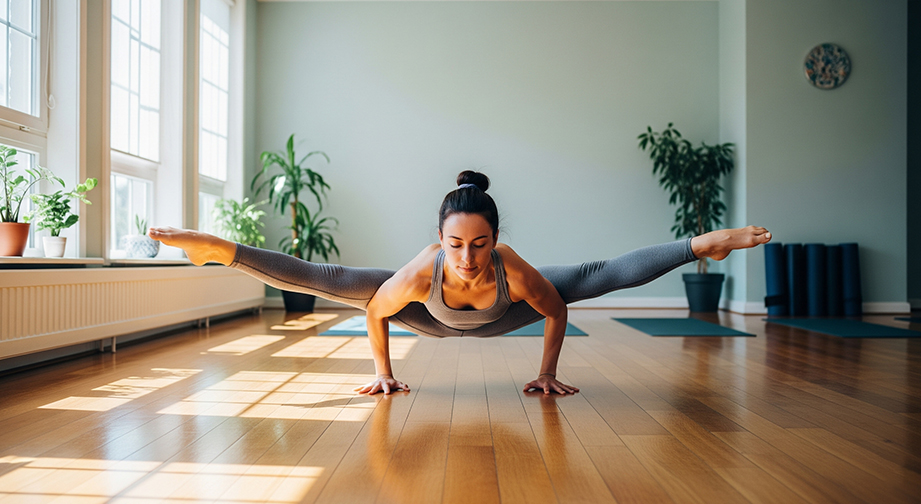
- Start in a squatting position (Malasana):
Feet wider than your hips, toes pointing out, arms inside your knees.
- Place your hands firmly on the mat:
Bring your hands between your feet, fingers spread wide, wrists directly under your shoulders.
- Work your shoulders under your knees:
One at a time, snuggle your upper arms/shouders under your knees as far as they’ll go. Try to get your thighs as high as possible on the triceps.
- Engage your core and lift your feet:
Lean slightly forward, shift weight into your hands. On an exhale, press your palms down, straighten your legs in front of you and lift both feet off the ground.
- Straighten your legs:
As you find balance, begin to straighten your legs out to the sides (like a firefly’s wings), keeping them active and strong.
- Keep your chest lifted and gaze forward:
Breathe deeply, keeping your face soft.
Inhale: Lift through your chest.
Exhale: Straighten your legs and press away from the floor.
- Hold the pose: Stay for 3-5 breaths or about 10–20 seconds, then gently lower your feet back down on an exhale.
Duration: Practice 2–3 rounds, resting in a simple seated posture between attempts.
Modifications for Beginners:
- Sit on a yoga block as you set up to reduce strain on your hamstrings & hips.
- Place hands on blocks for extra lift.
- Try lifting one foot at a time (Half Firefly Pose).
Advanced Intensifications:
- Straighten legs fully and point your feet.
- Bend elbows more to go lower, or try jumping into the pose from standing.
Alignment & Safety Tips
- Focus on: Strong core engagement, active legs, shoulders away from ears, straight arms.
- Common mistakes:
- Letting elbows flare out—keep arms hugging in
- Dropping your chest towards the floor—keep lifting your chest and heart forward
- Forgetting to breathe—steady, deep inhales and exhales calm your mind and body
- Safety precautions:
- Avoid if pregnant, with wrist/shoulder injuries, or severe lower back issues
- Warm up thoroughly (hips, hamstrings, wrists and core)
- Practice on a non-slip mat, with a blanket or crash pad in front for safety
Benefits of Tittibhasana (Firefly Pose)
- Physical Benefits
- Builds core and arm strength
- Opens hamstrings and hips
- Improves balance, coordination, and posture
- Mental Benefits
- Promotes focus and mindfulness
- Boosts confidence as you master a challenging pose
- Calms the mind, helping you stay centered and present
- Energy/Chakra Connection
- Stimulates Manipura Chakra (solar plexus) for personal power and clarity
- Awakens lightness and resilience in body and mind
Contraindications
- Recent or chronic injury to wrists, shoulders, elbows, or lower back
- Pregnancy
- High blood pressure, carpal tunnel syndrome or cardiovascular challenges
Safe Alternatives: Try Lizard Pose or Supine Butterfly/Half Happy Baby for hip and hamstring opening without weight-bearing.
Beginner’s Tips & Variations
- Props:
- Raise your hips with a block or folded blanket for easier entry
- Practice pressing hands on blocks for more lift
- Use the wall in front of you for gentle support/security
- Gentle Variations:
- Keep only one leg straight, other foot on the ground (Half Firefly)
- Focus on getting shoulders under knees, even if you don’t lift yet
- Advanced Variations:
- Straighten legs overhead (“Floating” Tittibhasana)
- Try jumping smoothly into Tittibhasana
- Combine with arm balances, e.g. jump through to Bakasana (Crow Pose)
How to Include Tittibhasana in a Yoga Flow
- Best as a main practice after warming up
- Pairs well with:
- Standing Forward Fold (Uttanasana) to prep hamstrings
- Lizard Pose (Utthan Pristhasana) for hip opening
- Crow Pose (Bakasana) to develop arm balance skills
Mind-Body Connection
Practicing Tittibhasana invites deep mindfulness. Concentrate on your breath and core—feel the lightness, just like a firefly rising! This pose encourages trust in your body and the courage to try new things. On a spiritual level, it’s linked to the solar plexus chakra (Manipura), which is connected to self-confidence and transformation.
Summary Box
- Asana Name: Firefly Pose / Tittibhasana (??????????)
- Level: Advanced (but modifications for all levels!)
- Focus Areas: Core, Hamstrings, Arms, Shoulders
- Duration: 10–20 seconds, 2–3 rounds
- Best Time to Practice: Morning or when body is warm
Frequently Asked Questions: Tittibhasana (Firefly Pose)
Is Tittibhasana safe for beginners?
This pose is challenging but accessible for beginners using props and modifications. Always warm up and listen to your body.
What should I do if my hamstrings are tight?
Spend extra time stretching your hamstrings and hips. Practice Half Firefly or simply work toward shoulders-under-knees without lifting.
How can I build up to Tittibhasana?
Work on plank holds, Crow Pose, and seated forward folds to develop core, arm, and hamstring flexibility.