Shalabhasana (Locust Pose): Step-by-Step Guide, Benefits & Beginner-Friendly Tips
Introduction
Shalabhasana, also known as the Locust Pose (pronounced sha-la-BAH-suh-nuh), is a gentle yet powerful reclining backbend in yoga. In Sanskrit, “Shalabh” means locust or grasshopper, and “asana” means pose. The essence of this posture is energizing: it wakes up your entire back body, builds core strength, and helps you stand tall—both physically and mentally.
If you’ve ever felt stiff after sitting too long, struggled with poor posture, or just want to try a calming pose to balance your energy, Shalabhasana can be your best friend on the yoga mat. Let’s break it down step by step!
Step-by-Step Guide to Shalabhasana (Locust Pose)
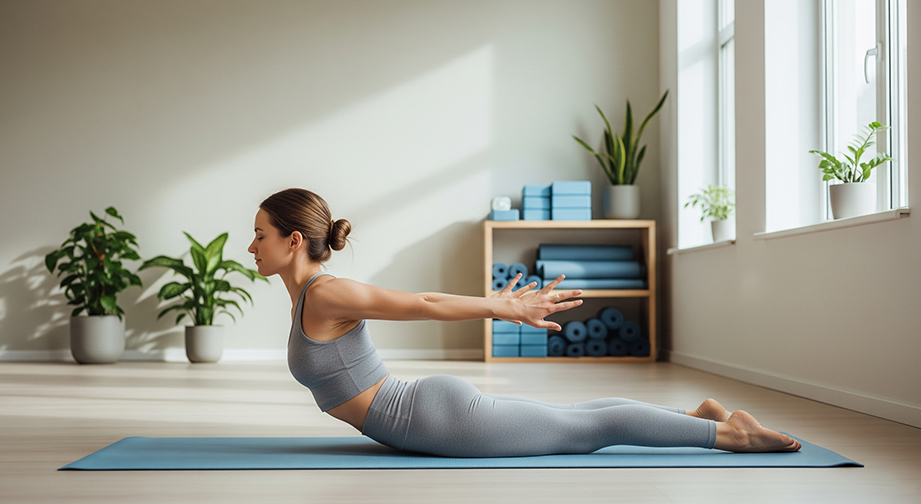
- Start Position: Lie flat on your belly, legs extended and hip-width apart. Keep your arms by your sides, palms facing down or tucked under your thighs.
- Rest Your Forehead: Gently place your forehead on the mat. Let your neck and jaw relax.
- Engage the Body: Take a deep inhale. On your next exhale, draw your belly button toward your spine to engage your core muscles.
- Lifting Up: With your next inhale, lift your chest, arms, and both legs off the floor. Try to keep your legs straight and squeeze your shoulder blades gently together.
- Stay & Breathe: Hold the pose for 3–5 breaths (up to 30 seconds). Focus on slow, steady breathing: inhale as you lengthen, exhale as you relax your face and neck.
- Release: On an exhale, lower your legs, chest, and arms back down. Turn your head to one side and rest for a few breaths.
- Repeat: Complete 2–3 rounds, resting in between.
- Beginner’s modification: Lift only your legs or chest (not both), or keep hands on the floor for support.
- Advanced option: Interlace your fingers behind your back and lift arms along with legs for a deeper shoulder opening.
Alignment & Safety Tips
- Key cues: Lengthen through the crown of your head. Keep the back of your neck long—avoid gazing up.
- Legs stay together or hip-width apart: Find what feels best for your low back.
- Don’t overarch your neck: Look down, not forward, to protect your cervical spine.
- Engage glutes and thighs: This protects your lower back and aids in lifting the legs.
- Common mistakes: Holding your breath, jerking upward, or crunching your low back. Instead, move slowly and breathe!
- Safety:
- Avoid if you’re pregnant.
- Consult your doctor if you have severe back, neck, or abdominal injuries, or recent surgery.
- Skip or modify if you have a hernia or serious disc problems.
Benefits of Shalabhasana (Locust Pose)
Physical Benefits
- Strengthens *back, glutes, and hamstrings*
- Improves *posture* and *spinal flexibility*
- Tones *core muscles* and supports lower back health
- Stimulates the digestive organs
Mental Benefits
- Relieves *stress* and mild anxiety
- Boosts *mindfulness* and concentration
- Promotes a feeling of *inner strength* and resilience
Chakra/Energy Connection
- Activates the Manipura (Solar Plexus) Chakra — linked to confidence, willpower, and self-esteem
- Energizes the entire body, fostering a sense of vitality and alertness
Contraindications
- Avoid Shalabhasana if you are pregnant, have major spinal injuries, or recent abdominal surgeries.
- Be cautious if you have hernia, high blood pressure, or migraines.
- Safe alternative: Try “Sphinx Pose” or “Cobra Pose” for similar benefits with reduced strain.
Beginner’s Tips & Variations
- Props: Place a folded blanket under your pelvis for comfort, or use a cushion under the chest for support.
- Gentle variation: Lift one leg at a time or keep hands under your shoulders for stability.
- Advanced variation: Interlace fingers behind the back or add a dynamic “flutter kick” with your feet lifted.
How to Include in a Yoga Flow
- Boosts energy, so it works best as a main practice or to energize you after a warm-up.
- Pairs well with:
- Bhujangasana (Cobra Pose)
- Setu Bandhasana (Bridge Pose)
- Balasana (Child’s Pose) for relaxation after
Mind-Body Connection
Shalabhasana is a chance to connect with your breath, awaken inner strength, and build confidence from the inside out. Mindfully lengthen with each inhale and let go of tension with each exhale. The solar plexus chakra (Manipura) connection helps you cultivate willpower and a sense of purpose—on and off the mat!
Shalabhasana (Locust Pose) Summary
- Sanskrit Name: Shalabhasana
- English Name: Locust Pose (Reclining)
- Level: Beginner to Intermediate
- Focus Areas: Back, core, hamstrings, glutes, shoulders
- Recommended Duration: 20–30 seconds, 2–3 rounds
- Best Time to Practice: Morning or whenever you need an energy boost
FAQs about Shalabhasana (Locust Pose)
Is Shalabhasana safe for beginners?
Yes! Locust Pose is beginner-friendly when practiced mindfully. Start slow, use props or gentler variations, and never push into pain.
Can Shalabhasana help with back pain?
When done correctly, Shalabhasana strengthens the lower back and supports healthy posture. However, if you have a serious back injury, consult your doctor first.
How often should I practice Shalabhasana?
2–3 rounds, a few times per week, can help build strength and flexibility over time. Listen to your body and rest as needed.
Remember, every body is unique. Honor your limits, go slowly, and enjoy the energizing benefits of Shalabhasana!