Pincha Mayurasana (Feathered Peacock Pose) – A Complete Guide for Yogis
Introduction
Pincha Mayurasana, or Feathered Peacock Pose, is a gorgeous yoga asana that looks as graceful as it feels empowering. In Sanskrit, “Pincha” means feather and “Mayura” means peacock—together representing the proud, vibrant tail of a peacock, balanced and upright.
This asana is all about balance and strength. It brings a sense of play and lightness to your practice—while also demanding focus and cultivating calm.
Ever wondered what it would be like to flip your perspective and feel truly strong in your own skin? If you’ve ever dreamt of building both confidence and balance, Feathered Peacock Pose could become your favorite new challenge.
Step-by-Step Guide to Pincha Mayurasana (Feathered Peacock Pose)
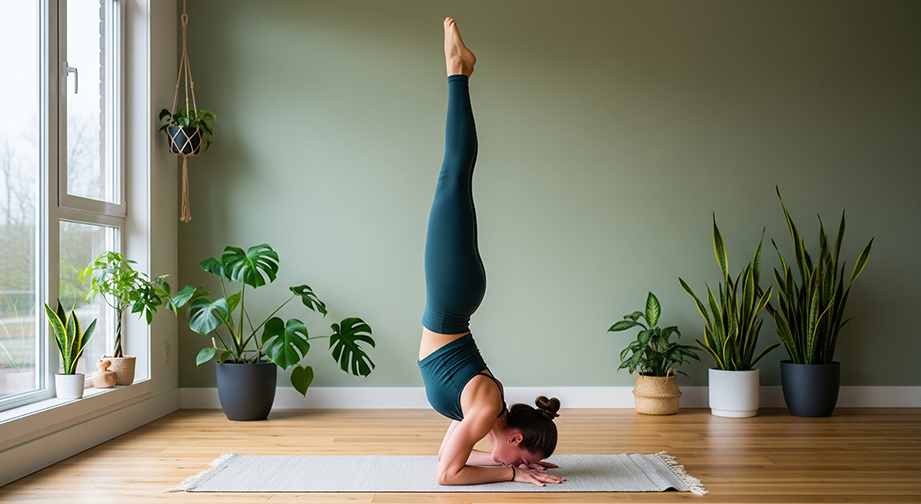
- Start on all fours (tabletop position). Lower your forearms to the mat with your elbows under your shoulders and your forearms parallel, or interlace your fingers for added stability as a beginner.
- Spread your fingers wide and press your palms and forearms firmly into the ground. Gaze softly ahead.
- Tuck your toes under and lift your knees off the floor, coming into a forearm Downward Dog shape. Walk your feet toward your elbows, bringing your hips high.
- Bend one knee and gently kick up your other leg, using a wall for support if needed. Hop both feet up, stacking your hips over your shoulders, and find balance.
- Engage your core and point your toes toward the ceiling. Breathe steadily. Hold for 3–6 breaths (or 10–30 seconds), gradually increasing as your strength grows.
- To exit, gently lower one leg and then the other, returning to Child’s Pose to rest.
- Inhale as you prepare and kick up.
- Exhale as you find balance and hold.
- Rounds: Practice 2–3 times, resting between attempts.
Modifications:
- For beginners: Kick up against a wall, keep one knee bent.
- For more challenge: Lift both legs straight, try moving away from the wall.
- For advanced yogis: Try lotus legs or split legs while balancing.
Alignment & Safety Tips
- Alignment cues:
- Keep elbows shoulder-width apart; don’t splay out.
- Press forearms and fingers firmly into mat for stability.
- Draw ribs in and engage your core to avoid arching the back.
- Gaze slightly forward, not between the hands or behind you.
- Common mistakes:
- Letting elbows drift wide—use a block or strap if needed.
- Dumping weight into the lower back—activate core and glutes.
- Bending elbows too much—keep arms strong and steady.
- Safety:
- Avoid if pregnant, have shoulder, neck, or back injuries.
- Do not practice if you have glaucoma or high blood pressure.
- Always warm up wrists and shoulders first.
Benefits of Pincha Mayurasana
Physical Benefits
- Builds strong shoulders, arms, and back
- Improves core stability and balance
- Stretches chest and strengthens wrists
- Enhances overall posture
Mental Benefits
- Boosts confidence and focus
- Calms the mind and relieves stress
- Promotes mindfulness and presence
Energy/Chakra Connection
- Activates the Manipura Chakra (solar plexus - personal power)
- Encourages upward flow of energy (“prana”)
Contraindications
- Who should avoid:
- If you have unhealed shoulder, neck, or back injuries
- During pregnancy
- High blood pressure, glaucoma, or serious cardiac conditions
- Absolute beginners (unless directly supervised)
- Safe alternatives: Dolphin pose, Forearm Plank, Puppy pose
Beginner’s Tips & Variations
- Props:
- Use a wall for support
- Place a block between hands or under the forehead for stability
- Try a folded blanket or bolster under your shoulders
- Variations for beginners: Dolphin pose holds, knees-bent hops
- Advanced variations: Leg splits, lotus legs, scorpion variation (bending the back deeply)
How to Include Feathered Peacock Pose in a Yoga Flow
- Best practiced as part of your main sequence, after warming up your shoulders and core.
- Pairs well with:
- Dolphin Pose (for warm-up and shoulder strength)
- Adho Mukha Svanasana (Downward Dog, for lengthening and prepping)
- Child’s Pose (rest and release afterward)
Mind-Body Connection
Pincha Mayurasana invites you to be present, paying close attention to your breath and alignment. By balancing upside-down, you literally shift your perspective and build unwavering focus. On a spiritual level, it can help ignite your inner fire (solar plexus chakra), giving you courage and clarity both on and off the mat.
Summary Box
- Asana Name: Pincha Mayurasana (Feathered Peacock Pose)
- Level: Intermediate to Advanced
- Focus Areas: Shoulders, arms, core, back
- Duration: 10–30 seconds per round; 2–3 rounds
- Best Time to Practice: Morning or early evening with a warm-up
Frequently Asked Questions (FAQs)
1. Is Pincha Mayurasana suitable for beginners?
Feathered Peacock Pose is challenging but accessible with wall support and the right prep. Beginners are advised to start with dolphin pose and use props.
2. What should I do if I’m afraid of falling?
Practice near a wall, and focus on building shoulder and core strength gradually. Don’t rush—progress will come!
3. How often should I practice Pincha Mayurasana?
Start 2–3 times per week, increasing frequency as you grow stronger and more confident.
Remember: Every journey into Feathered Peacock Pose is unique. Celebrate your progress, be kind to your body, and enjoy the strength and confidence this incredible asana brings into your life!