Parshvottanasana (Intense Side Stretch Pose): Steps, Benefits, Tips & Variations
Introduction
Parshvottanasana, known in English as Intense Side Stretch Pose or Pyramid Pose, is a standing yoga asana that deeply stretches the legs, spine, and opens the chest. The name Parshvottanasana comes from the Sanskrit: parshva (side), uttana (intense stretch), and asana (pose).
Essence: Calming and balancing, Parshvottanasana helps quiet the mind while building flexibility and strength in your body.
If you’ve ever felt stiff hips or tight hamstrings after sitting too long, this yoga pose can be your best friend. Let’s walk through it together!
Step-by-Step Guide: How to Practice Parshvottanasana
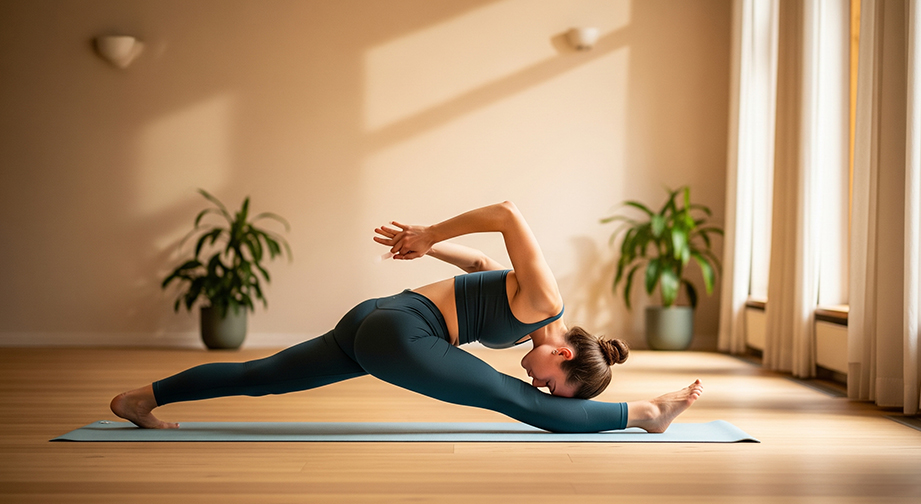
- Start in Tadasana (Mountain Pose): Stand tall at the front of your mat with feet hip-width apart, arms by your sides. Focus on steady, even breathing.
- Step Back: Take a big step back with your left foot (about 3-4 feet), turning your left toes out slightly (45° angle) and grounding both feet. Heels should be aligned.
- Square Your Hips and Shoulders: Face your hips and chest forward. Imagine bringing your right hip back and your left hip forward.
- Bring Your Hands Behind Your Back: On an inhale, bring your palms together in prayer behind your back (reverse prayer). If this is too intense, simply hold your elbows or fingertips.
- Lengthen the Spine: Inhale and reach the crown of your head up, keeping your spine long.
- Fold Forward: Exhale and begin to hinge from your hips, folding forward over your right leg. Keep your back flat as long as possible.
- Hold and Breathe: Let your gaze rest down and soften your neck. Breathe deeply here for 5–8 slow breaths (30–60 seconds).
- Rise Up: Inhale to come up slowly, keeping your spine long. Release your arms, step forward, and repeat on the other side.
- Beginner Modifications: Place hands on blocks or your shin for support, or keep hands on hips.
- Advanced Option: Deepen the forward fold, or experiment with different arm variations, such as palm-to-palm (Anjali Mudra) or reaching arms overhead.
Tip: Practice 1–2 rounds per side, holding for 30–60 seconds each time.
Alignment & Safety Tips
Key Alignment Cues
- Keep hips squared forward; avoid letting one hip swing back.
- Extend through your spine; don’t round your back excessively.
- Engage your thighs and ground both feet firmly.
Common Mistakes
- Letting hips twist out of alignment. (Think: headlights pointing straight ahead!)
- Collapsing the chest or rounding the back.
- Locking out the front knee — keep a micro-bend.
Safety Precautions
- Avoid this pose if you are pregnant, have recent lower back or hamstring injuries, or issues with balance.
- If you have high blood pressure, keep your head above your heart or practice with a chair for support.
Benefits of Parshvottanasana
Physical Benefits
- Deeply stretches hamstrings, hips, and calves
- Opens shoulders and chest
- Improves posture and spinal alignment
- Builds leg and core strength
Mental Benefits
- Relieves stress and anxiety
- Promotes concentration and mindfulness
- Calms the mind, encouraging a sense of inner balance
Energy / Chakra Connection
- Stimulates the Root Chakra (Muladhara), grounding your energy
- Encourages balance in the Sacral Chakra (Swadhisthana), nurturing creativity and flow
Contraindications
- Avoid if you have recent or chronic leg, hip, or back injuries.
- Pregnant practitioners or those with balance issues should skip or modify this pose.
- Uncontrolled high blood pressure: Keep hands on hips and head higher than the heart.
Safe alternatives: Try Utthanasana (Standing Forward Fold) or Ardha Hanumanasana (Half Split) instead.
Beginner’s Tips & Variations
- Use yoga blocks under your hands for support if you can’t reach the floor comfortably.
- Practice at a wall for balance support when squaring the hips.
- Gentle variation: Keep the knees slightly bent, and rest the hands on hips or blocks.
- For more challenge: Add the full reverse prayer (palms together behind your back), or try folding deeper to bring your nose toward the knee.
How to Include Parshvottanasana in a Yoga Flow
Parshvottanasana makes a wonderful main sequence pose, especially after warming up the legs and hips. It’s also great toward the cool-down portion of your practice to lengthen the hamstrings deeply.
Poses it pairs well with:
- Adho Mukha Svanasana (Downward Dog)
- Virabhadrasana I (Warrior I Pose)
- Trikonasana (Triangle Pose)
Mind-Body Connection
As you practice Parshvottanasana, let your breath guide your movement and help you release tension. Tune in to the stretch, the grounding of your feet, and the calming effect on your mind. Yogic texts mention that this pose stabilizes and grounds the lower chakras, aiding in emotional balance and clarity.
Summary Box: Parshvottanasana (Intense Side Stretch)
- Asana Name: Parshvottanasana (Intense Side Stretch Pose)
- Level: Beginner to Intermediate
- Focus Areas: Hamstrings, hips, spine, shoulders
- Duration: 30–60 seconds per side (1–2 rounds)
- Best Time to Practice: Morning or Evening
FAQs about Parshvottanasana
Q: Do I need to touch my hands behind my back?
A: No, simply rest hands on the hips or use a yoga strap if needed.
Q: Can beginners practice Parshvottanasana?
A: Absolutely! Start slow, use props, and focus on alignment over depth.
Q: What if my hamstrings are very tight?
A: Bend your front knee slightly, use blocks, and practice regularly for steady improvement.
Sources & References
This article is based on guidance from trusted global health organizations:
Medical Disclaimer
This content is provided for informational and educational purposes only and is not intended as medical advice, diagnosis, or treatment.
Always consult a qualified healthcare professional before making changes to your health routine.
Editorial Policy
Our health content is prepared using verified public health resources and reviewed internally to ensure accuracy, clarity, and reliability for users.