Malasana (Garland Pose): Beginner's Guide, Benefits & Tips
Introduction
Malasana—also known as the Garland Pose or simply the yoga squat—is a grounding and opening posture that brings mobility to your hips, legs, and back. In Sanskrit, mala means "garland," reflecting the shape your body forms, and asana means "pose" or "seat."
Essence: Malasana is a balancing, calming posture that helps relieve stiffness and rejuvenate your lower body.
If you’ve ever felt tightness in your hips after a long day of sitting, Malasana is your new best friend. This beginner-friendly squat helps you rediscover natural mobility and comfort in your body.
Step-by-Step Guide to Malasana (Garland Pose)
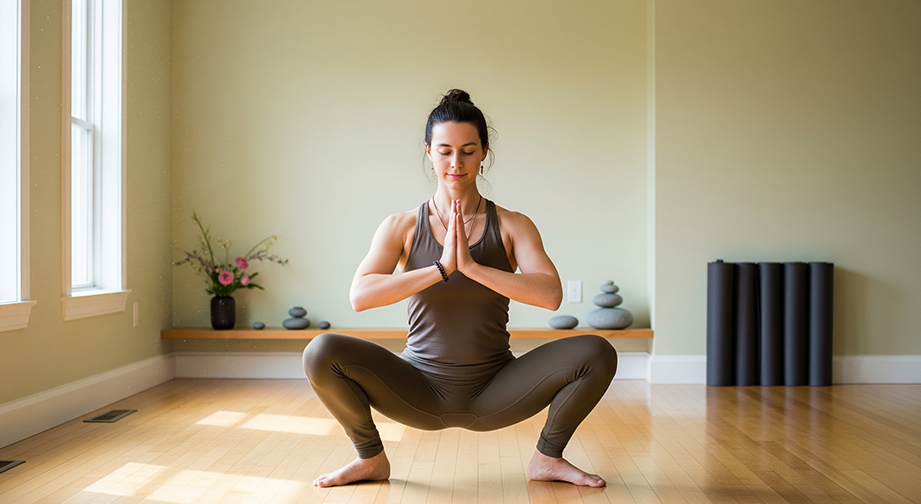
- Start Standing: Begin in Mountain Pose (Tadasana), feet hip-width apart or slightly wider, toes angled out slightly.
- Bend Your Knees and Lower Down: Inhale deeply. As you exhale, bend your knees and start to lower your hips towards the ground, coming into a squat. Your torso should stay upright and open.
- Position Your Feet & Knees: Keep your heels on the ground (use support if needed). Your knees should point in the same direction as your toes.
- Bring Hands to Heart: Place your palms together in a prayer position (Anjali Mudra) at your chest. Press your elbows gently against your inner knees to help open your hips.
- Lengthen the Spine: With every inhale, lift the crown of your head upwards. On each exhale, relax your shoulders but keep the chest broad.
- Breathe and Hold: Hold for 5–10 slow, steady breaths (about 30 seconds to 1 minute). Repeat for 2–3 rounds as needed.
Modifications for Beginners:
- Place a folded blanket, block, or rolled mat under your heels if they don’t touch the ground.
- Use a wall for support behind you if your balance feels unsteady.
Advanced Intensifications:
- Deepen the squat or bring the arms inside the legs, reaching towards the floor or wrapping around the ankles for a bind.
- Lift the chest more and experiment with arm balances such as Bakasana (Crow Pose) from Malasana.
Alignment & Safety Tips
- Keep your heels grounded. If they lift, use a prop under them instead of forcing them down.
- Point knees in the same direction as your toes to protect your joints.
- Keep the back straight and chest lifted—avoid rounding through the upper back.
- Breathe steadily. If feeling unstable, engage your core gently.
Common Mistakes:
- Letting knees collapse inward.
- Hunching or rounding the back.
- Holding breath or tensing shoulders.
Safety Precautions:
Avoid Malasana if you have knee or lower back injuries, significant ankle stiffness, or recent surgery. Pregnant individuals should only practice under expert guidance or avoid deep squatting.
Benefits of Malasana (Garland Pose)
Physical Benefits:
- Stretches hips, groin, and lower back
- Strengthens ankles, feet, and legs
- Improves posture and balance
- Enhances digestion and pelvic mobility
Mental Benefits:
- Promotes calm and grounding
- Reduces stress and anxiety
- Encourages mindfulness and focus on breath
Energy/Chakra Connection:
- Activates the Root Chakra (Muladhara) for grounding and security
- Stimulates the Sacral Chakra (Svadhisthana) for creativity and flow
Contraindications
- Avoid if you have recent or chronic knee, hip, or ankle injuries
- If pregnant or experiencing pelvic pain, only practice under supervision
- Those with lower back issues: consult a medical expert before performing
Safe Alternatives: Try Supported Malasana using a block under your hips, or practice a gentle seated wide-leg pose instead.
Beginner’s Tips & Variations
Props:
- Blocks: Under heels or sit on one for support
- Wall: Lean against for stability
- Bolster or rolled blanket: Support under hips
Gentle Variations:
- Practice half-squats or use props until deeper mobility develops
- Keep hands on the floor for balance
Advanced Variations:
- Bind arms around legs
- Transition into Crow Pose (Bakasana) if ready
How to Include Malasana in Your Yoga Flow
Malasana works beautifully as a warm-up to open hips and ankles, as a mid-practice hip release, or even as a grounding pose towards the end of your session.
Pairs well with:
Mind-Body Connection
As you sit in Malasana, focus on your breath and sense the connection with the earth through your feet. This pose helps you cultivate a sense of stability—a moment to root down and settle your mind. Energetically, it grounds your root chakra, encouraging feelings of support and safety.
Asana Name: Malasana (Garland Pose, Squatting Pose)
Level: Beginner
Focus Areas: Hips, Ankles, Lower Back, Core
Duration: 30 seconds–1 minute, 2–3 rounds
Best Time to Practice: Morning or Evening, after gentle warm-up
Frequently Asked Questions
- Can I do Malasana every day? Yes, practicing daily can improve hip and ankle flexibility. Listen to your body and use props if needed.
- What if my heels don’t touch the floor? Use a block or rolled blanket under your heels for support while working towards mobility.
- Is Malasana safe during pregnancy? With experienced guidance and caution, it can be adapted—but always consult your healthcare provider first.
This HTML page offers a comprehensive, empathetic, and SEO-optimized guide for Malasana (Garland Pose), covering instructions, alignment, benefits, contraindications, beginner tips, sequencing ideas, chakra significance, and common questions. It uses simple, warm language and supports beginner and advanced yogis alike.