Makarasana (Crocodile Pose): The Complete Guide for Beginners & Beyond
Introduction
Makarasana, or Crocodile Pose, is a deeply restorative yoga posture that soothes the nervous system and promotes relaxation from head to toe. The Sanskrit word "Makara" means crocodile, symbolizing stillness and patience, while "asana" means pose or seat. At its essence, Makarasana is all about calm and gentle restoration.
If you’ve ever felt stiff after sitting too long at a desk, or need a go-to posture to help unwind at the end of the day, this gentle reclining pose is your new best friend.
Step-by-Step Guide
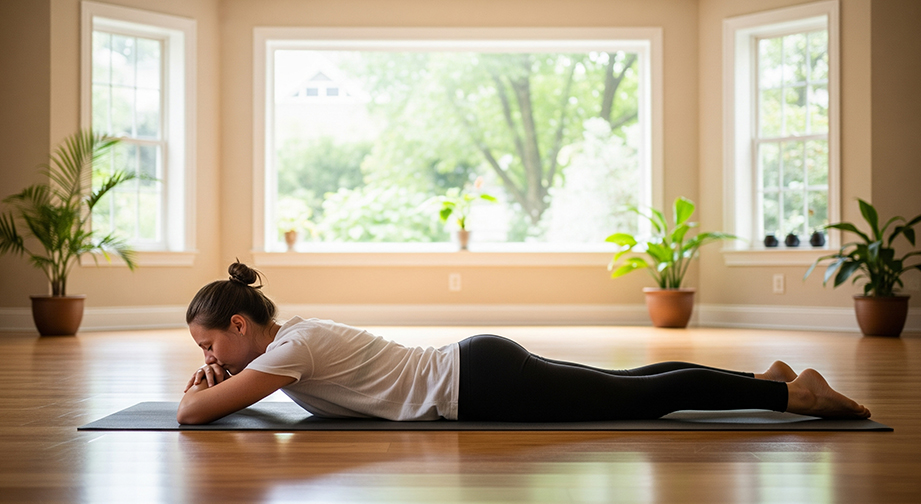
- Lie face down on your yoga mat, legs extended and slightly apart (about hip-width).
- Bend your elbows out to the sides and rest your forehead on top of your stacked hands. (Alternatively, rest your chin on your hands.)
- Relax your entire body — especially your shoulders, back, legs, and abdomen. Let your heels drop out to the sides naturally.
- Breathe deeply:
- Inhale gently through your nose, feeling your belly press into the mat.
- Exhale slowly, enjoying the release and softness through your back and hips.
- Stay in the pose for 1–3 minutes or more, focusing on long, smooth breaths. Repeat for 2–3 rounds if desired.
Beginner Modifications:
- Place a folded blanket or bolster under your chest for extra comfort.
- Bend your knees slightly if you feel pressure in your lower back.
To Intensify (Advanced):
- Keep the legs together and actively point the toes away from you to stretch the spine.
- Extend your arms overhead, resting your forehead directly on the mat.
Alignment & Safety Tips
- Allow your entire body to surrender to gravity—don’t hold tension in the back, jaw, or shoulders.
- Keep your head comfortably aligned; avoid turning it to one side for long periods.
- Let the abdomen and chest rest fully on the floor for optimal relaxation.
Common Mistakes:
- Tensing the lower back—if so, widen your legs or use a prop for support.
- Clenching the jaw or face—practice relaxing your facial muscles.
Safety Precautions:
- Avoid the posture in late pregnancy or with recent abdominal surgery.
- If you have serious spinal or neck injuries, consult a health professional first.
Benefits
Physical Benefits:
- Releases tension in the lower back and spine
- Improves posture and breath awareness
- Gently opens hips and shoulders
- Alleviates fatigue and back discomfort
Mental Benefits:
- Promotes deep relaxation and stress relief
- Calms the mind and reduces anxiety
- Encourages mindfulness and grounded awareness
Energy/Chakra Connection:
- Balances the Root Chakra (Muladhara) for grounding and security
- Soothes the nervous system
Contraindications
- Avoid if you have recent abdominal, chest, or spinal surgery
- Not recommended after the first trimester of pregnancy
- Severe back or neck injuries (consult your doctor first)
Alternative: Try Savasana (Corpse Pose) if you are unable to lay on your stomach comfortably.
Beginner’s Tips & Variations
Props:
- Use a folded blanket, bolster, or pillow under the chest, forehead, or ankles for extra comfort
Gentle Variations:
- Keep the legs wider apart or bend knees slightly for lower back ease
Advanced Variations:
- Extend arms overhead, keeping them parallel, or practice subtle breath retention (kumbhaka) for deeper focus
How to Include in a Yoga Flow
- Best as: A restorative pause during cool-down or after deep backbends.
- Pairs well with: Bhujangasana (Cobra Pose), Salabhasana (Locust Pose), and Balasana (Child’s Pose)
- Excellent transition between active and resting asanas.
Mind-Body Connection
Practice Makarasana with full attention to your breath and bodily sensations. This will deepen the relaxation response, calm the mind, and foster a sense of safety and groundedness.
Spiritually, Crocodile Pose is linked to the Root Chakra (Muladhara), supporting grounding and a sense of belonging.
Summary Box
- Asana Name: Makarasana (Crocodile Pose)
- Level: Beginner
- Focus Areas: Spine, lower back, breath, relaxation
- Duration: 1–3 minutes (or longer, if desired)
- Best Time to Practice: Morning for energy, evening for relaxation
FAQs about Makarasana (Crocodile Pose)
Can I do Makarasana if I have back pain?
Yes! Makarasana is especially helpful for gentle back pain, but if you have a severe condition, consult your doctor and use props for support.
Is Makarasana suitable during pregnancy?
It is generally not advised after the first trimester. Substitute with side-lying or supine restorative poses.
How is Makarasana different from Savasana?
Savasana is performed on the back, while Makarasana is on the belly, providing unique support and release for the lower back.