Karnapidasana (Ear-Pressing Pose): Step-by-Step Guide, Benefits, Safety & Tips
Introduction
Karnapidasana, also known as the Ear-Pressing Pose, is a deeply calming yoga posture that helps stretch your entire body while relaxing your mind. In Sanskrit, "Kar?a" means "ear," "Pida" means "pressure," and "Asana" means "pose" — so it literally translates to the "Ear-Pressing Pose."
Essence: Calming and introspective inversion for flexibility and serenity.
If you ever feel stiff after being at your desk all day or need a deeply restorative stretch, Karnapidasana can be your perfect escape to melt away tension and find inner calm!
Step-by-Step Guide
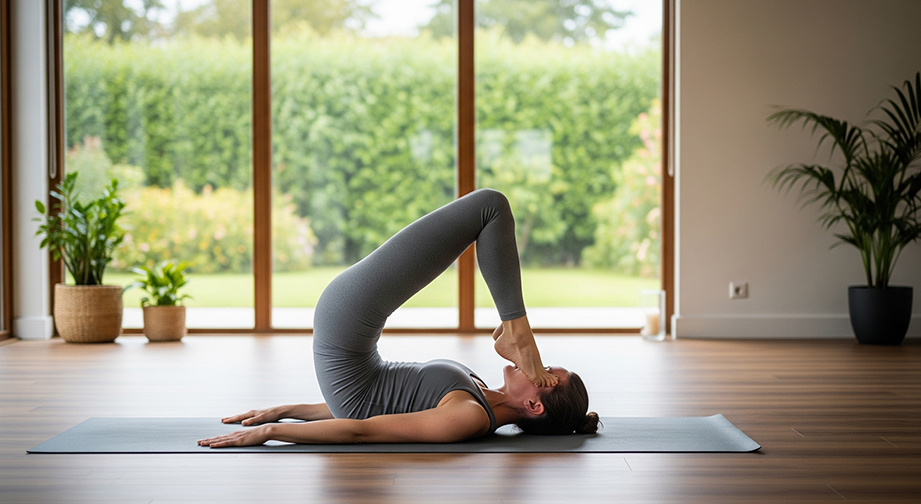
- Start in Shoulder Stand (Sarvangasana): Lie on your back, arms by your sides. On an inhale, lift your legs overhead, supporting your back with your hands.
- Move into Plow Pose (Halasana): On an exhale, lower your legs over your head, so your toes touch the floor behind you. Keep hands supporting your lower back or rest arms flat.
- Transition to Karnapidasana: Bend your knees and bring them towards the sides of your head, gently pressing them to your ears. Your shins can rest on the floor; tuck your chin.
- Release your arms: You can keep your hands supporting your back or stretch them out on the floor, palms facing down for stability.
- Breathe: Hold the pose, breathing deeply. Inhale to lengthen; exhale to soften your shoulders and back.
- To come out: Inhale, support your back, and slowly roll your spine back down vertebra by vertebra. Rest on your back for a few breaths.
- Breathing Pattern: Inhale when lifting or lengthening, exhale as you fold or settle deeper into the posture.
- Duration: Hold for 5–10 slow breaths (30–60 seconds), repeat 1–2 rounds if comfortable.
- Modifications for Beginners: Place a folded blanket under your shoulders for support. Feet or shins don’t have to touch the floor. Rest knees above the floor if needed.
- Intensifications: Interlace fingers behind your back, roll shoulders under, or draw knees closer to the mat for a deeper stretch.
Alignment & Safety Tips
- Alignment Cues: Keep your neck neutral and relaxed; weight should be on your shoulders, not your neck. Draw shoulder blades together for support. Keep breath smooth.
- Common Mistakes: Don't force knees to the ground; avoid turning your head. Don't let your back round excessively. Engage your core and support your lower back if needed.
- Safety Precautions:
- Avoid if you have neck, back, or shoulder injuries.
- Pregnant women and people with glaucoma, uncontrolled blood pressure, or recent surgeries should not practice this pose.
- Come out immediately if you feel pain, tingling, or discomfort.
Benefits
Physical Benefits
- Deeply stretches the spine, shoulders, and neck
- Improves hamstring and back body flexibility
- Stimulates abdominal organs and digestion
- Promotes healthy posture and spinal alignment
Mental Benefits
- Calms the mind and relieves stress
- Promotes introspection and inner silence
- Reduces anxiety and fatigue
Energetic / Chakra Connection
- Stimulates the Vishuddha (Throat) Chakra and Ajna (Third-Eye) Chakra
- Supports energetic balance and deep relaxation
Contraindications
- Neck, back, or shoulder injuries
- Pregnancy
- Uncontrolled high blood pressure, glaucoma, heart issues
- Recent abdominal or spinal surgery
Safe alternatives: Legs up the wall (Viparita Karani), Reclined Butterfly Pose (Supta Baddha Konasana), or Supported Bridge (Setu Bandhasana).
Beginner’s Tips & Variations
- Props: Place a folded blanket under your shoulders for neck protection. For more support, practice with your feet on a chair or block.
- Gentle Variation: Stay in Plow Pose with knees slightly bent. Do not press knees to ears if inflexible.
- Advanced Variation: Hold your knees with your arms or bind hands behind your back.
Always focus on comfort and safety—never force your body into the pose.
How to Include in a Yoga Flow
- Best time: Works wonderfully as a cool-down or finishing posture to soothe body and mind.
- Pairs well with: Plow Pose (Halasana), Shoulder Stand (Sarvangasana), Bridge Pose (Setu Bandhasana).
- Follow with a gentle supine twist or Savasana for complete release.
Mind-Body Connection
While holding Karnapidasana, notice the sound of your breath echoing within—a cue to embrace inner stillness and mindfulness. This pose encourages self-reflection, stimulating the throat and third-eye chakras for clarity and deep calm.
Summary Box
- Asana Name: Ear-Pressing Pose (Karnapidasana)
- Level: Intermediate
- Focus Areas: Spine, hamstrings, shoulders, neck
- Duration: 30–60 seconds, 1–2 rounds
- Best Time to Practice: Morning or evening (on empty stomach)
FAQs
1. Can beginners try Karnapidasana?
You can try with plenty of support and modifications. Always start with Plow Pose and use props as needed.
2. What should I do if I feel pressure in my neck?
Come out of the pose immediately. Ensure your weight is on your shoulders and upper arms, not your neck.
3. Is Karnapidasana safe during menstruation?
It’s best to avoid deep inversions during menstruation. Try gentler, restorative poses instead.
4. How often can I practice Karnapidasana?
1–3 times a week is plenty, or as part of a balanced yoga sequence.