Halasana (Plough Pose): Your Complete Guide for a Calm, Flexible Body
Introduction
Halasana, or the Plough Pose, is a classic yoga inversion asana that gently stretches your body, especially after long hours sitting at a desk or standing on your feet. The Sanskrit word hala means “plough” — and in this position, your body resembles a farmer’s plough, ready to refresh and energize your “fields” of body and mind.
The essence of Halasana is calmness and deep restoration. If you’ve ever felt stiff or tight after sitting too long, this pose is your new best friend for undoing that tension and inviting new energy to flow through your spine.
Step-by-Step Guide: How to Practice Halasana
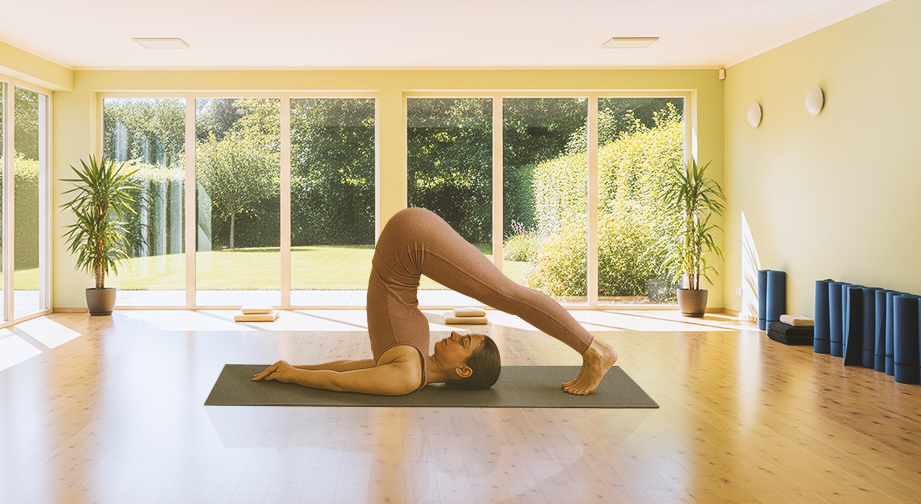
- Begin on Your Back: Lie flat on your yoga mat, arms by your sides, palms facing down. Take a few deep breaths to settle.
- Inhale & Lift Legs: As you inhale, gently engage your core and lift both legs up to 90 degrees (perpendicular to the floor).
- Exhale & Roll Over: On your exhale, press your palms down and slowly lift your hips, rolling your spine off the mat. Guide your legs over your head, aiming to touch your toes to the floor behind you.
- Find Your Form: Rest your arms flat (palms down), or support your lower back with your hands if needed. Let your chest move toward your chin.
- Breathe & Hold: Maintain smooth, relaxed breaths. Hold for 5–8 breaths (around 30 seconds–1 minute).
- To Come Out: Support your back with your hands, inhale and gently roll out vertebra by vertebra, using your core to control the movement back to lying flat.
Repeat: 1–2 rounds, resting between each if desired.
Modifications for Beginners:
- Place a folded blanket under your shoulders for neck support.
- Keep your hands on your lower back for extra support.
- If your feet don’t touch the ground, rest them on a chair or block.
For Advanced Yogis:
- Interlace your fingers and extend your arms behind your back on the floor.
- Try lifting one leg at a time for extra core engagement.
Alignment & Safety Tips for Halasana
- Alignment Cues:
- Press shoulders and upper arms into the mat.
- Keep your neck long and avoid turning your head.
- Draw the chin gently towards the chest (throat lock).
- Common Mistakes:
- Don’t force your feet to touch the ground (use props if needed).
- Avoid collapsing weight into your neck; the support should be mainly in shoulders and arms.
- Don’t hold your breath. Keep the breath steady and relaxed.
- Safety Precautions:
- Avoid if you have neck, back, or spinal injuries.
- Do not practice if pregnant, menstruating, or with high blood pressure.
- Move slowly both into and out of the pose.
Halasana Benefits
Physical Benefits:
- Stretches the entire spine, shoulders, and hamstrings
- Improves spinal flexibility and posture
- Tones abdominal organs and stimulates digestion
- Relieves tightness in the back and legs
Mental Benefits:
- Calms the nervous system for stress relief
- Soothes anxiety and fatigue
- Encourages mindfulness and introspection
Energy/Chakra Connection:
- Stimulates the Throat (Vishuddha) Chakra - supports clear communication
- Balances energy flow along the spine
Contraindications: When to Avoid Halasana
- Neck, back, or spinal issues
- Recent abdominal surgery
- Pregnancy or menstruation
- Uncontrolled high blood pressure, glaucoma
Safe Alternatives: Try Legs-Up-the-Wall Pose (Viparita Karani) or Bridge Pose (Setu Bandhasana) for similar benefits without inversion.
Beginner’s Tips & Pose Variations
- Props: Use folded blankets under shoulders, yoga blocks under feet, and support your back with hands.
- Gentle Variation: Practice with feet on a chair, or just lift legs halfway overhead.
- Advanced Variation: Move into Karnapidasana (Ear Pressure Pose) by bending knees and placing them near ears, or do Parsva Halasana (Side Plough) for a twist.
How to Include Halasana in Your Yoga Flow
Halasana works best as a cool-down or closing posture, allowing physical and mental tension to melt away before Savasana.
Pairs well with:
- Shoulderstand (Sarvangasana)
- Bridge Pose (Setu Bandhasana)
- Fish Pose (Matsyasana)
Mind-Body Connection
While in Halasana, bring your attention to your breath and the sensations in your spine and shoulders. Allow thoughts to soften, encouraging a sense of surrender. Spiritually, this yoga asana is linked to deep introspection and throat chakra (Vishuddha) balance, supporting clearer inner and outer dialogue.
Summary Box: Plough Pose (Halasana)
- Asana Name: Halasana (Plough Pose)
- Level: Beginner to Intermediate
- Focus Areas: Spine, core, shoulders, hamstrings
- Duration: 30 seconds–1 minute per round
- Best Time to Practice: Morning or Evening (empty stomach)
Frequently Asked Questions about Halasana (Plough Pose)
Is Halasana good for beginners?
Yes, with props and modifications. Beginners should use support under the shoulders and move slowly in and out of the posture.
Can I practice Halasana every day?
Yes, but always listen to your body and avoid if you have any contraindicated health conditions.
What should I do if my feet don’t touch the floor?
Rest your feet on blocks, a chair, or the wall. Don’t force the stretch.
Is Halasana safe for neck problems?
It is best to avoid this pose if you have any neck injuries or issues.
With patience and awareness, Halasana (Plough Pose) can become a cherished part of your yoga practice, unfolding greater flexibility, calm, and clarity over time.