Dhanurasana (Bow Pose): The Ultimate Guide for Beginners & Beyond
Introduction
Dhanurasana, also known as Bow Pose, is a classic reclining backbend in yoga. Its Sanskrit name breaks down to “Dhanur” (bow) and “asana” (pose), perfectly capturing the shape your body forms—a taut bow ready to be released! The essence of Dhanurasana is energized openness—combining strength, stretch, and a sense of uplifting motivation.
If you’ve ever felt stiff after sitting too long, or wanted to melt away tension from your back and shoulders, Dhanurasana is your best friend. Let’s explore how this yoga posture can add flexibility, strength, and vitality to your yoga practice!
Step-by-Step Guide: How to Practice Dhanurasana (Bow Pose)
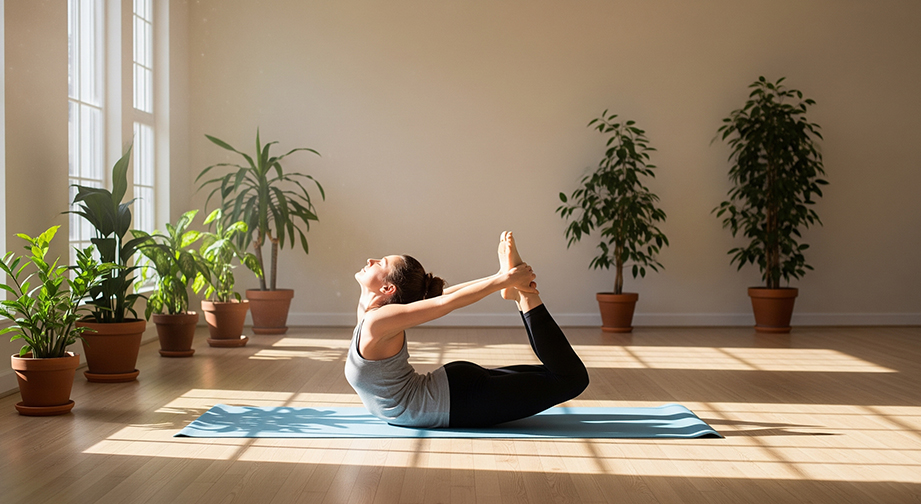
- Begin on your belly. Lie flat on your yoga mat, forehead resting gently on the floor, arms by your sides, and legs hip-width apart.
- Bend your knees. Bring your heels toward your buttocks. Flex your feet.
- Reach back and hold your ankles. Grasp the outside of your ankles with your hands (not the tops of the feet). Thumbs are on the inside, fingers outside.
- Inhale—lift up! As you inhale, lift your chest and thighs off the floor by kicking your ankles into your hands. Keep your knees hip-width or slightly wider—the body forms a gentle “bow.”
- Gaze forward. Relax your shoulders away from your ears. Breathe naturally; keep your face soft.
- Hold the pose for 20–30 seconds (or 2–5 breaths) as a beginner. As you become comfortable, aim for two rounds of 30 seconds each with rest in between.
- Exhale—release. Gently lower your chest and thighs to the mat, release your ankles, and rest one cheek on the floor.
- Breathing Pattern: Inhale as you lift into the pose; exhale as you lower down. Breathe smoothly throughout.
- Modification for Beginners: Can’t reach your ankles? Use a yoga strap or scarf looped around your feet and hold onto each end.
- To Intensify: Try holding the pose longer, bringing knees closer together, or gently rocking forward and back in the posture.
Alignment & Safety Tips for Bow Pose
- Focus on: Keeping thighs parallel; don’t let knees splay out wide.
- Press feet firmly into hands to lift chest; avoid straining neck (long neck, relaxed gaze forward).
- Engage core muscles gently to protect the lower back.
- Avoid if pregnant, after recent abdominal surgery, or with back/neck injuries.
- Never force the pose—if you feel pain (especially in lower back or knees), gently come out immediately.
Q: My knees hurt in Dhanurasana—what should I do?
A: Support knees with a folded blanket, or try half-bow (raising one leg at a time).
Benefits of Dhanurasana
Physical Benefits
- Strengthens back, glutes, and leg muscles
- Stretches chest, shoulders, and hip flexors
- Improves spinal flexibility and posture
- Stimulates abdominal organs—may aid digestion
Mental Benefits
- Releases tension and stress from body and mind
- Enhances focus, mindfulness, and presence
- Fosters a sense of uplifted, energizing calm
Chakra/Energy Connection
- Activates the Anahata (Heart) and Manipura (Solar Plexus) chakras
- Opens energy channels for deeper breath and emotional release
Contraindications
- Pregnancy
- Recent abdominal, back, or neck injury/surgery
- Severe spinal issues or herniated disc
- Severe high or low blood pressure
Safe alternatives: Try Bhujangasana (Cobra Pose), Salabhasana (Locust Pose), or supported bridge pose if Dhanurasana isn’t suitable.
Beginner’s Tips & Variations
- Props: Use a yoga strap around ankles if hands don’t reach. Place a folded blanket under hips for extra cushion.
- Gentle Variation: Half Bow (Ardha Dhanurasana)—raise one leg and arm at a time; keeps pressure low.
- Advanced: Try rolling gently side to side, or holding the pose longer with deeper backbend.
How to Include Dhanurasana in Your Yoga Flow
- When to Practice: Best as a heart-opening peak pose in the middle of your practice, after your body is warmed up.
- Pairs well with: Cobra Pose (Bhujangasana), Upward-Facing Dog (Urdhva Mukha Svanasana), Child’s Pose (Balasana) for counterpose and release.
Mind-Body Connection
In Dhanurasana, focus on your breath and the gentle arc of your body. Practice with kindness, paying attention to sensations without force. This asana is known for opening the heart—physically and energetically—helping you cultivate courage, self-love, and emotional balance.
Chakra: The heart and solar plexus chakras, associated with love, compassion, and willpower, are deeply stimulated in this pose.
Summary Box: Dhanurasana (Bow Pose)
- Asana Name: Bow Pose / Dhanurasana
- Level: Beginner–Intermediate
- Focus Areas: Back, chest, shoulders, hip flexors
- Duration: 20–30 seconds / 1–2 rounds
- Best Time to Practice: Morning or late afternoon (on empty stomach)
FAQs on Dhanurasana (Bow Pose)
Q: Is Dhanurasana safe for beginners?
A: Yes, with proper warm-up, alignment, and modifications. Always listen to your body!
Q: What should I do if I can’t reach my ankles?
A: Use a yoga strap or try the half-bow variation.
Q: Can Dhanurasana relieve back pain?
A: It can help if practiced mindfully and only if there is no existing injury. Consult a yoga teacher or healthcare professional if unsure.
Remember, practicing Dhanurasana (Bow Pose) is about exploring your limits gently and celebrating every bit of progress. Let each breath lift you a little higher—in body, mind, and spirit. Namaste!