Bharadvajasana (Bharadvaja’s Twist): A Beginner-Friendly Guide
Bharadvajasana, also called Bharadvaja’s Twist, is a gentle seated yoga pose that loosens up your spine and hips. The Sanskrit name comes from Bharadvaja, a wise sage, and asana which means position or posture. The essence of Bharadvajasana is calm, mindful spinal twisting—the perfect antidote to a stiff back after a long day at your desk or in your car.
If you’ve ever felt tightness in your lower back or wished for a simple stretch to ease tension, Bharadvaja’s Twist can be your new best friend!
Step-by-Step Guide: How to Practice Bharadvajasana
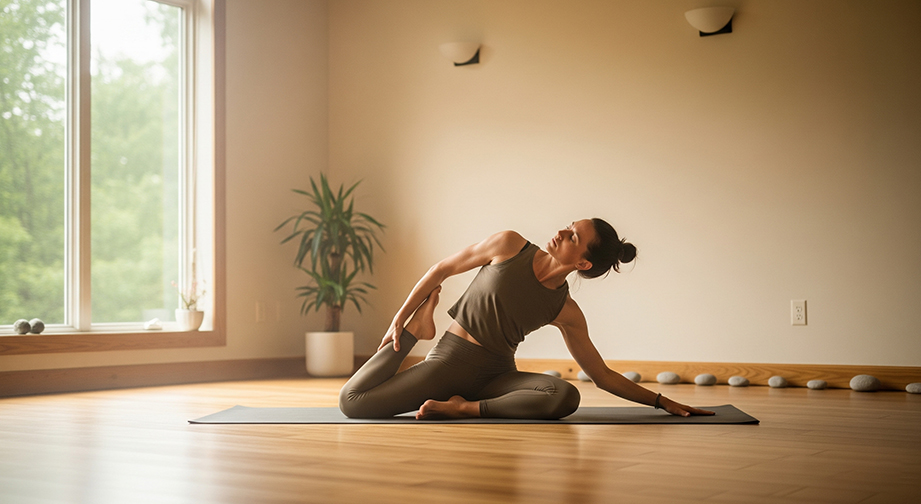
- Start in Staff Pose (Dandasana): Sit on your mat with your legs extended, spine tall, and hands by your sides.
- Bend your knees: Slide both legs over to your right side, letting your feet rest beside your right hip. Your left ankle should rest in your right arch or just beside it.
- Align your sitting bones: Ground both sit bones evenly into the floor (sit on a folded blanket if needed).
- Inhale: Lengthen through your spine and draw your shoulders back, keeping your chest open.
- Exhale: Gently twist to your left, bringing your left hand behind you (fingertips on the mat) and right hand to your outer left thigh.
- Stay: With each inhale, grow taller. With each exhale, gently deepen the twist without straining.
- Hold: Stay here for 5–10 slow breaths or about 30 seconds. To release, exhale and gently unwind. Repeat on the opposite side for balance.
Modifications for Beginners:
- Sit on a folded blanket or a block to elevate the hips.
- Keep the legs slightly more forward if your knees don’t like deep bending.
- Use your hand on a chair or wall for extra support.
Intensification for Advanced Students:
- Wrap the top hand behind your back to clasp your opposite elbow or wrist if accessible.
- Deepen the twist on each exhale while keeping the spine tall.
Alignment & Safety Tips for Bharadvaja’s Twist
- Alignment cues: Keep both sit bones grounded, spine tall, chest open. Elongate through the crown of your head.
- Common mistakes:
- Rounding the back—always lift up before twisting.
- Letting knees float—support under thighs/hips if needed.
- Forcing the twist—gentle, not straining.
- Safety:
- Avoid if pregnant, or consult your doctor/teacher first.
- Skip deep twist if you have recent spinal or abdominal injuries.
- If you experience pain (not just stretch), ease out immediately.
Benefits of Bharadvajasana (Physical, Mental & Energetic)
Physical Benefits
- Improves spinal flexibility & mobility
- Gently stretches hips, shoulders, and lower back
- Helps relieve mild backache & sciatica discomfort
- Supports better posture
- Massages abdominal organs to aid digestion
Mental Benefits
- Reduces stress & anxiety
- Enhances focus and mindfulness
- Encourages a sense of calm and clarity
Energy / Chakra Connection
- Stimulates the Manipura (solar plexus) chakra, linked to confidence & inner strength
- Balances energy in the spine, encouraging a free flow of prana (life force)
Contraindications: When to Avoid Bharadvajasana
- Pregnancy (especially late term) – modify under guidance, or skip
- Recent hip, knee, spine, or abdominal injury or surgery
- Severe herniated disc or sciatic pain exacerbated by twisting
Safe alternatives: Try a supine (lying down) twist, or a gentler seated twist with legs extended straight.
Beginner’s Tips & Variations
- Props: Use a yoga block or folded blanket under your seat for extra comfort.
- Gentle variations: Keep bottom leg straight if knee discomfort; hug the knee instead of twisting deeply.
- Wall/Chair support: For added stability, do the twist seated on a chair, twisting gently to hold the backrest.
- Advanced variations: Bind your arms or bring elbow to outside of the knee for a deeper twist (only if your spine feels ready).
How to Include Bharadvajasana in a Yoga Flow
- Best used as a cool-down or mid-sequence pose once muscles are warm.
- Pairs well with:
- Cat-Cow (Marjaryasana-Bitilasana) – for spine preparation
- Seated Forward Fold (Paschimottanasana) – for hamstring & back release
- Bridge Pose (Setu Bandhasana) – to balance twisting with gentle backbending
Mind-Body Connection in Bharadvaja’s Twist
Practice Bharadvajasana mindfully, noticing the gentle wringing out of tension with each exhale. This pose offers a meditative moment to observe your breath, find your center, and reconnect with calm energy. Twists are often linked to detoxification and renewal, both physically and emotionally.
Summary Box
- Asana Name: Bharadvaja’s Twist (Bharadvajasana)
- Level: Beginner (with gentle variations)
- Focus Areas: Spine, hips, shoulders, core
- Recommended Duration: 30 seconds – 1 minute per side; 1–2 rounds each
- Best Time: Morning or evening, or whenever you need a gentle reset
Frequently Asked Questions: Bharadvajasana
- Is Bharadvajasana safe for beginners?
Yes, with props and modifications. Don’t force the twist; listen to your body.
- Can I practice this asana daily?
Absolutely! It’s gentle enough for daily spine and hip care.
- What if my knees hurt in Bharadvaja’s Twist?
Use extra padding, keep one leg straight, or do a chair-based twist.
- Do I need to warm up before Bharadvajasana?
Light warm-up (gentle cat-cow or seated side bends) is helpful, but not required for a mild version.