Bakasana & Kakasana (Crow/Crane Pose): A Supportive Step-By-Step Yoga Guide
Introduction
Bakasana (Crow Pose) and Kakasana (Crane Pose) are powerful arm-balancing positions in yoga that strengthen your entire body—while teaching balance, focus, and courage. In Sanskrit, “Baka” means crane and “Kaka” means crow, with both asanas symbolizing lightness and alertness.
The essence? Balancing and empowering. These poses transform wobbly moments into steady confidence, all while giving your core and arms an incredible workout.
If you’ve ever wondered, “Could I really balance on my hands?”—Bakasana and Kakasana are beginner-friendly gateways. Even if you feel stiff or worried about falling, this is your invitation to try, play, and grow stronger!
Step-by-Step Guide
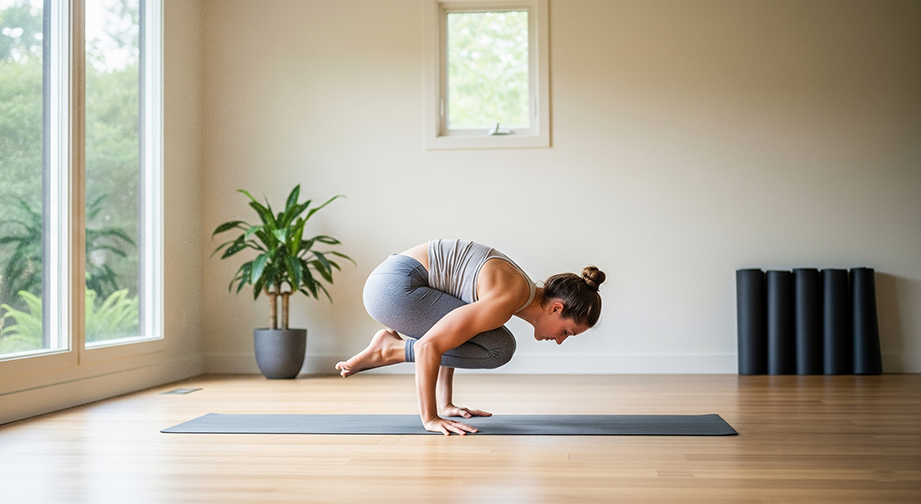
- Start in a Squat (Malasana):
- Bring your feet a little wider than hip-width apart.
- Come into a squat, toes pointing slightly out. Keep your palms on the mat in front of you, shoulder-width apart.
- Inhale deeply and relax your shoulders.
- Position Your Arms:
- Bend your elbows (for Crow Pose/Kakasana) or straighten them (for Crane/Bakasana).
- Place your knees high up onto your upper arms—near the armpits.
Inhale as you set your arms and engage your core.
- Engage and Lift:
- Begin to tip forward gently, shifting weight onto your hands.
- Look slightly ahead, not straight down.
- Lifting one foot, then the other, try to balance both knees on the upper arms.
Exhale slowly as you draw your feet off the floor.
- Hold and Breathe:
- Press the floor away with your hands.
- Lift through your core and back body.
- Breathe steadily—inhale for stability, exhale to refine balance.
Hold for 3–5 breaths (start with 1–2 breaths if you’re a beginner). Repeat 2–3 rounds, resting between attempts.
- To exit: Gently lower one foot down at a time. Return to your squat and take a few deep breaths.
Modifications for Beginners:
- Use a yoga block under your feet for added height.
- Place a pillow/blanket in front of you—just in case you tip forward.
- Practice lifting one foot at a time.
Intensify for Advanced:
- Straighten your arms fully for Bakasana (Crane).
- Experiment with jumping into handstand or transitioning to other arm balances.
Alignment & Safety Tips
- Key Alignment: Gaze forward, not straight down; keep shoulders away from ears; draw belly in tight.
- Hands spread wide to support weight distribution.
- Core engagement is the secret for stability—hug your belly in!
- Common mistakes:
- Collapsing the chest or rounding the back (keep lifting!).
- Hands too close together—keep them shoulder-width.
- Knees slipping down arms—hug them high and tight into the arms.
- Safety Precautions:
- Avoid if you have wrist, shoulder, or lower back injury.
- Pregnant students should not practice Bakasana/Kakasana.
- If you have carpal tunnel or recent surgery, skip this one or consult your doctor first.
Benefits of Bakasana & Kakasana
Physical Benefits
- Builds arm, shoulder, and wrist strength
- Tones the core and abdominal muscles
- Improves balance, posture, and coordination
- Stretches the upper back and groin
Mental Benefits
- Boosts concentration and mindfulness
- Reduces stress through focused, steady breathing
- Encourages self-confidence and patience
Energy/Chakra Connection
- Activates the Solar Plexus Chakra (Manipura) — seat of personal power and will
- Invokes a sense of lightness and inner resilience
Contraindications
- Wrist, shoulder, or elbow injuries—avoid this pose.
- Pregnancy
- Recent surgery (especially involving upper body)
- Severe carpal tunnel syndrome
Safe Alternatives: Practice Tabletop Pose, Plank, or Malasana (Yogi Squat) for foundational strength and balance.
Beginner’s Tips & Variations
- Props: Place a yoga block under your feet or a bolster in front for confidence.
- Gentle Variation: Lift only one foot at a time as you build strength.
- Wall Support: Practice near a wall to prevent toppling forward.
- Advanced Variation: From Bakasana, try pressing up to a handstand or move into side crow (Parsva Bakasana).
How to Include in a Yoga Flow
- Works best as a main practice posture, once your body is warm.
- Pair with:
- Downward Facing Dog (Adho Mukha Svanasana)
- Plank Pose
- Chaturanga Dandasana
- Follow with gentle wrist stretches and a restorative pose like Child’s Pose.
Mind-Body Connection
While practicing Bakasana or Kakasana, stay anchored to your breath. Each moment of balance and every gentle tumble is a lesson in presence and persistence. With regular practice, you’ll notice greater courage on—and off—the mat.
Chakra focus: Strengthens your Manipura (Solar Plexus) Chakra, building both physical and inner power.
Summary Box
- Asana Name: Bakasana/Kakasana (Crane/Crow Pose)
- Level: Intermediate (accessible for beginners with modifications)
- Focus Areas: Core, arms, wrists, shoulders
- Duration: 3–5 breaths, 2–3 rounds
- Best Time to Practice: Morning or before your main yoga sequence
Frequently Asked Questions
Is Bakasana (Crow) the same as Kakasana (Crane)?
No. In yoga texts, Kakasana is Crow Pose (arms bent), and Bakasana is Crane Pose (arms straight)—though sometimes these names are reversed in modern classes.
I don’t have much arm strength. Can I still try?
Absolutely! Start with simple modifications and use props. Never force — with consistency, your strength and confidence will build.
What if I’m scared of falling?
Practice with a pillow or bolster in front of you. Falling is part of the process! Stay playful and patient.