Anantasana (Vishnu's Couch Pose) – A Beginner-Friendly Guide to Reclining Balance and Calm
Introduction
Anantasana, also known as Vishnu’s Couch Pose or Eternal One’s Pose, is a gentle reclining yoga posture that gracefully stretches your side body and opens the hips. The Sanskrit word "Ananta" means "endless" or "infinite," referring to the mythical serpent of Lord Vishnu—a symbol of restfulness and balance.
Essence: Anantasana offers balancing, calming, and stretching all packed into one simple, accessible pose.
If you’ve ever felt stiff or “crunched” after sitting at a desk or sofa, Anantasana is your go-to posture for decompression and gentle core engagement!
Step-by-Step Guide to Anantasana
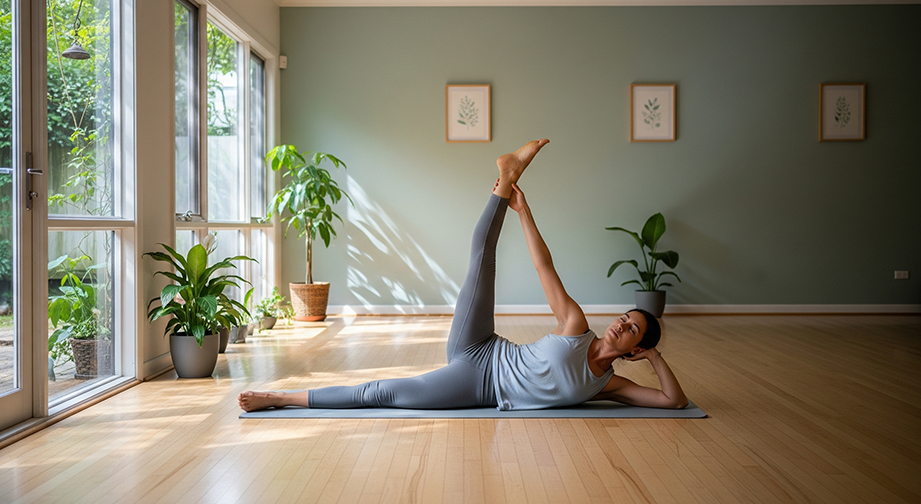
- Begin Lying Down:
Lie down comfortably on your right side, legs stretched out, feet flexed. Stack your left leg directly over your right.
- Support Your Head:
Extend your right arm long along the mat and gently rest your head on your right bicep, or bend the elbow and cradle your head with your palm (elbow pointing forward).
- Stabilize Your Balance:
Place your left hand in front of your chest to steady yourself.
- Bend the Left Knee:
Inhale deeply, bend your left knee and draw it towards the ceiling.
- Grab Your Left Big Toe:
Use your left hand to hold your left big toe (peace sign grip: index and middle fingers + thumb).
If you can’t reach, use a yoga strap or hold anywhere on the leg that’s comfortable.
- Straighten the Top Leg:
Exhale slowly and begin to straighten your left leg towards the ceiling, keeping your chest open and shoulders stacked. Keep both legs active and core gently engaged.
Gaze can be either up to the ceiling or softly forward.
- Breathe and Hold:
Stay for 5–8 slow, even breaths (inhale expanding the body, exhale relaxing any tension).
- Release and Switch Sides:
Exhale, gently lower your left leg and release the grip. Rest a moment, then roll over and repeat on the other side.
Duration: Hold for 20–40 seconds per side, 1–2 rounds.
Breathing: Inhale to lengthen and open, exhale to stretch and soften.
Modifications & Intensifications
- Beginners: Keep knee slightly bent, use a strap or a block under your top thigh, or practice near a wall for extra support.
- Advanced: Try flexing the lifted foot more deeply, holding a full side plank leg extension, or stacking shoulders and hips for additional balance challenge.
Alignment & Safety Tips
- Keep your hips and shoulders stacked vertically (avoid rolling backwards).
- Don't let your supporting elbow splay out—keep it directly under your shoulder if propping your head.
- Core gently engaged to prevent collapsing in the lower back.
- Keep extended leg active (flex the foot!) to protect the knee joint.
Common Mistakes
- Rolling onto the back – keep stacking side to side.
- Locking the raised knee – always maintain a micro-bend if needed.
- Over-tensing the neck or clenching the jaw.
Safety Precautions
- Avoid if you have recent hip, hamstring, or shoulder injuries.
- Pregnant practitioners: only practice under expert guidance.
- Those with balance issues can use a wall or bolster for added steadiness.
Benefits of Anantasana
Physical Benefits
- Lengthens and stretches the side body, hamstrings, and calves.
- Strengthens oblique muscles and legs.
- Improves spinal alignment and balance.
- Gently opens the hips.
Mental Benefits
- Promotes a sense of calm and grounding.
- Encourages focus and concentration.
- Reduces stress and anxiety by slowing the breath.
Energy & Chakra Connection
- Stimulates the Manipura (Solar Plexus) Chakra, enhancing confidence and inner strength.
- Creates a sense of spaciousness and “endlessness,” true to its name.
Contraindications
- Do not practice if you have acute hip, back, or hamstring injuries.
- Avoid during advanced pregnancy unless supported by a teacher.
- People with severe balance disorders should practice a gentler reclining pose (like Supta Padangusthasana – Reclining Hand-to-Big-Toe Pose).
Safe Alternatives: Legs-Up-the-Wall Pose, Supine Hamstring Stretch.
Beginner’s Tips & Variations
- Props: Use a yoga strap around your lifted foot if you can’t reach; place a block, folded blanket, or bolster under your head or bottom leg for extra support.
- Gentle Variation: Keep the upper knee softly bent and hold the shin instead of the toe.
- Advanced Variation: Practice with both hands behind your head (like in a “side plank”), or lift both legs for a greater challenge.
How to Include Anantasana in a Yoga Flow
Anantasana works beautifully as a mid-practice posture, especially after warming up the hips and hamstrings. It can also be a calming prelude to savasana, giving your mind and body a “reset.”
Pairs well with:
- Supta Padangusthasana (Reclining Hand-to-Big-Toe Pose)
- Parighasana (Gate Pose)
- Sphinx Pose (Gentle Backbend)
Mind-Body Connection
While practicing Anantasana, let each breath lengthen your body and relax your thoughts.
Imagine embodying the quiet balance and expansiveness of "Ananta"—infinite space and calm.
Chakra Focus: Bring your awareness to the belly and side body, inviting energy and confidence to flow.
Summary Box: Anantasana
- Asana Name: Anantasana (Vishnu’s Couch Pose, Eternal One’s Pose)
- Level: Beginner to Intermediate
- Focus Areas: Side body, core, hamstrings, hip flexibility
- Duration: 20–40 seconds per side
- Best Time to Practice: Morning or Evening, especially when you need to unwind or restore balance
FAQs: Anantasana (Vishnu’s Couch Pose)
Q: Is Anantasana suitable for complete beginners?
A: Absolutely! Just start with knee bent or use a strap. Focus on balance and keep the posture relaxed.
Q: Why can’t I balance in this pose?
A: It’s common. Use a wall, strap, or bolster for support while building side-body strength and awareness.
Q: What does Anantasana symbolize?
A: The pose is inspired by Ananta, the cosmic snake, and Vishnu, the preserver—representing infinity, restfulness, and timeless trust.
Q: Can I try this with tight hamstrings?
A: Yes. Keep the upper knee bent, or use a strap to avoid overstraining. Flexibility will improve with regular practice.