Some days, your energy feels steady. Other days, you may feel sharp in the morning, sluggish after lunch, then oddly alert again at night.
That does not always mean something is wrong. Energy naturally rises and falls throughout the day, influenced by sleep, meals, activity, stress, hydration, light exposure, and your internal body clock.
Understanding those patterns can make it easier to work with your energy instead of fighting it.
Your Body Clock Plays a Big Role
Your circadian rhythm is your body’s roughly 24-hour internal timing system.
It helps regulate sleep, alertness, hormone release, body temperature, and other daily processes. That means your energy is not meant to stay perfectly flat from morning to night.
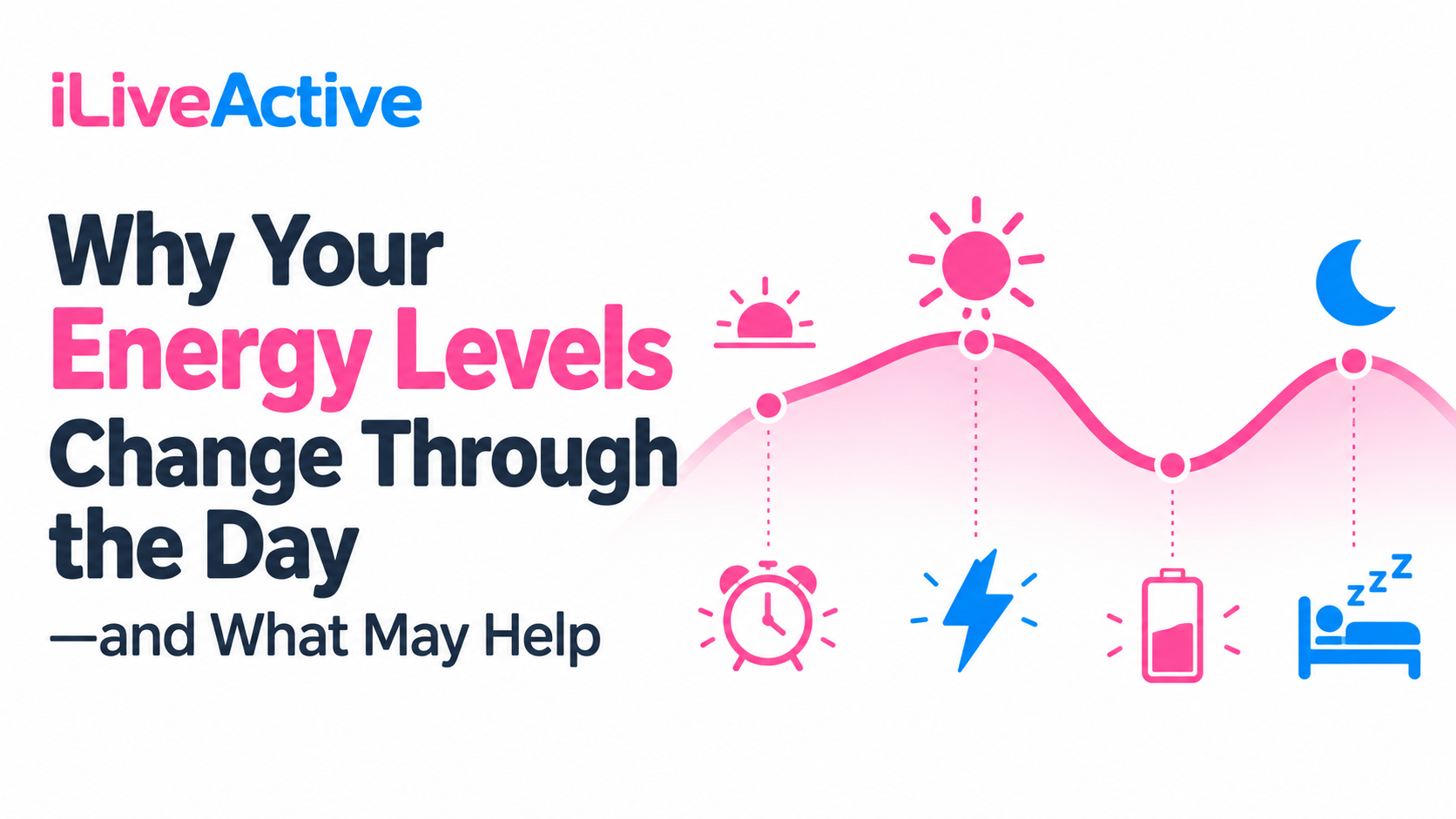
For many people, alertness increases after waking, stays relatively strong through the morning, dips somewhat in the early afternoon, and may rise again later in the day before gradually winding down.
That afternoon drop is not always caused by lunch. Your circadian rhythm itself can contribute to a natural dip in alertness.
The exact pattern varies. Some people feel most focused early in the day, while others tend to peak later.
Sleep Quality Matters More Than Just Hours
It is easy to focus only on how long you slept, but sleep quality and consistency matter too.
You can spend eight hours in bed and still feel tired if your sleep was fragmented or poorly timed.
Things that may affect next-day energy include:
- Frequent waking during the night
- Irregular sleep and wake times
- Alcohol close to bedtime
- Late-night screen use
- Stress or racing thoughts
- Sleeping at times that do not match your usual body clock
A consistent sleep schedule may help your body anticipate when to feel alert and when to wind down.
If fatigue is persistent despite adequate sleep, it is worth discussing with a healthcare professional because many medical factors can also affect energy.
Meals Can Change How You Feel
Food gives your body fuel, but meal composition can influence how steady that energy feels.
A very large meal may leave some people feeling sleepy afterward. Meals that are mostly refined carbohydrates and low in protein, fiber, or healthy fats may also leave you feeling hungry or drained sooner.
A more balanced meal might include:
- A source of protein
- High-fiber carbohydrates
- Vegetables or fruit
- Some healthy fat
That does not mean every meal needs to be perfectly planned.
The useful question is whether your usual meals leave you feeling satisfied and functional for the next few hours.
If you regularly experience a sharp crash after eating, experimenting with portion size and meal balance may be helpful.
Hydration Can Affect Alertness Too
Even mild dehydration may contribute to headaches, fatigue, or difficulty concentrating in some people.
You do not need to constantly drink water throughout the day, but it can be easy to forget when you are busy.
One simple approach is to use routine events as reminders:
Drink some water after waking.
Have water with meals.
Keep a bottle nearby while working.
Increase fluid intake when exercising or spending time in hot weather.
Urine color is not a perfect test, but consistently very dark urine can be a practical sign that you may need more fluids.
Movement Often Helps More Than Sitting Through a Slump
When energy drops, the instinct may be to stay seated and push through.
Sometimes a little movement works better.
A short walk, a few minutes of stretching, or simply standing up and moving around can increase blood flow and provide a change in stimulation.
You do not need a full workout.
Even five to ten minutes of movement may help you feel more awake, especially during an afternoon slump.
Outdoor movement may offer an additional benefit because exposure to daylight can help support your circadian rhythm.
Caffeine Timing Can Help-or Backfire
Caffeine can improve alertness temporarily, but timing matters.
A morning coffee may feel useful. Repeated caffeine late in the day can sometimes interfere with sleep, which may create a cycle of poor sleep followed by more caffeine the next day.
Caffeine sensitivity also differs widely.
Some people can drink coffee in the afternoon with little noticeable effect on sleep. Others may still feel the effects many hours later.
If you often feel tired during the day and struggle to fall asleep at night, moving caffeine earlier may be worth trying.
Stress Can Drain Energy Without You Realizing It
Stress is not always energizing.
Chronic mental load can leave you feeling physically tired even if you have not done much physical activity.
Constant notifications, multitasking, decision-making, worry, and emotional tension all require attention.
That can make breaks surprisingly useful.
A short period of quiet, a breathing exercise, a walk, or a few minutes away from a screen may help reduce mental overload.
The goal is not to eliminate stress completely. It is to create moments when your nervous system is not being asked to respond to something.
Track Your Pattern Before Trying to Fix It
Instead of assuming you need more coffee or more motivation, pay attention to your energy pattern for several days.
Notice:
When do you feel most alert?
When does your energy usually drop?
What did you eat beforehand?
How well did you sleep?
Were you sitting for several hours?
Was the day unusually stressful?
Patterns often become clearer when you look at them across a week instead of judging one bad afternoon.
The Bottom Line
Energy naturally changes throughout the day.
Your body clock, sleep, meals, hydration, movement, caffeine, and stress can all influence how alert or tired you feel at different times.
You may not be able to maintain peak energy from morning until night—and you probably do not need to.
A more useful goal is to notice your own rhythm and support it with consistent sleep, balanced meals, regular movement, hydration, and realistic breaks.
For more practical, science-informed wellness guidance, read more on iLiveActive or download the iLiveActive app.