Blood pressure is one of the most common health measurements, yet the numbers can still feel confusing. You may see a reading such as 118/76 mmHg and wonder what each number means, why it changes, or when it might be worth paying closer attention.
A blood pressure reading is not a complete picture of your health by itself. It is one useful measurement that can help show how strongly blood is moving through your arteries at a particular moment.
What Do the Two Blood Pressure Numbers Mean?
A blood pressure reading contains two numbers.
The top number, called systolic blood pressure, reflects the pressure in your arteries when your heart contracts and pumps blood.
The bottom number, called diastolic blood pressure, reflects the pressure in your arteries while your heart relaxes between beats.
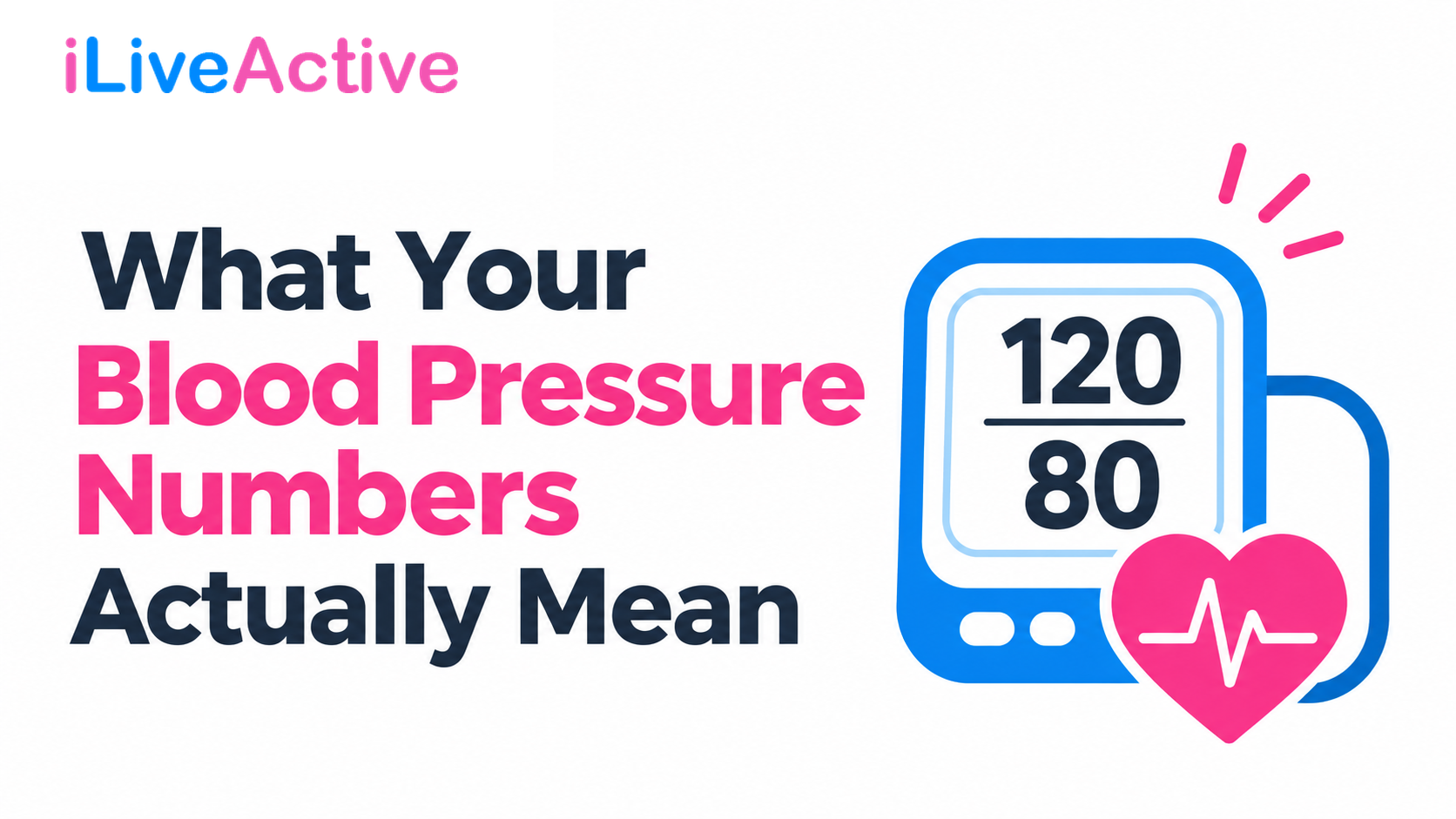
For example, in a reading of 120/80 mmHg:
- 120 is the systolic pressure
- 80 is the diastolic pressure
The unit “mmHg” stands for millimeters of mercury, a measurement that has traditionally been used for blood pressure.
Both numbers matter because they provide slightly different information about how your cardiovascular system is functioning.
What Is Considered a Typical Blood Pressure Range?
Blood pressure categories are often used as general reference points.
For many adults, a reading below approximately 120/80 mmHg is generally considered within a healthy range. Readings that stay consistently above that level may fall into elevated or higher blood pressure categories depending on the exact numbers.
However, one reading is rarely enough to draw conclusions.
Age, medications, physical activity, stress, sleep, caffeine, hydration, illness, and even how you are sitting can affect the result.
This is why healthcare professionals often look at multiple readings over time rather than focusing on a single measurement.
Why Blood Pressure Changes During the Day
Blood pressure is not a fixed number.
It naturally rises and falls throughout the day. It may be lower while you are resting and higher during exercise, stressful situations, or periods of physical activity.
Other temporary influences may include:
- Caffeine
- Poor sleep
- Stress or anxiety
- Pain
- Recent exercise
- Certain medications
- A full bladder
- Talking during the measurement
Even the way the measurement is taken can make a difference.
For example, sitting with your legs crossed, holding your arm unsupported, or using a cuff that does not fit properly may affect the result.
The goal is usually not to make every reading identical. It is to understand your overall pattern.
Why Trends Matter More Than One Reading
A single higher-than-usual reading does not necessarily mean something is wrong.
Similarly, one normal reading does not always mean blood pressure is consistently within a healthy range.
Looking at readings across several days or weeks may provide more useful information.
For people who monitor blood pressure at home, keeping a simple log can help identify patterns. Some people take readings at similar times each day so the measurements are easier to compare.
Wearable devices and connected blood pressure monitors may also make tracking easier, although their accuracy and capabilities can vary.
The most useful question is often not, “Was this number good or bad?”
A better question may be: “Is there a consistent pattern developing?”
How to Get a More Reliable Blood Pressure Reading
Small changes in technique can improve consistency.
Before measuring, it may help to sit quietly for about five minutes. Keep your back supported, feet flat on the floor, and arm resting around heart level.
Try to avoid exercise, nicotine, or caffeine shortly before the measurement if possible.
Use the correct cuff size and follow the instructions that come with your monitor.
Some healthcare professionals may recommend taking two readings a minute or so apart and recording both.
Consistency matters because a properly measured trend is usually more informative than an occasional reading taken under very different conditions.
When Should You Pay More Attention?
If your blood pressure readings repeatedly fall outside the range your healthcare professional has recommended for you, it may be worth discussing the pattern with them.
Your personal target may depend on factors such as age, medications, pregnancy, cardiovascular risk, kidney health, or other medical conditions.
Very high readings can sometimes require prompt medical evaluation, especially when they occur alongside symptoms such as chest discomfort, severe shortness of breath, sudden weakness, confusion, vision changes, or a severe headache.
If you are unsure what a particular reading means for you, a healthcare professional can help interpret it in the context of your overall health.
Blood Pressure Is One Part of the Bigger Picture
Blood pressure can provide useful information, but it is only one health metric.
Sleep, physical activity, nutrition, stress, cholesterol, blood sugar, family history, medications, and other factors can all contribute to cardiovascular health.
Rather than judging your health based on one number, it may be more useful to view blood pressure as one piece of a larger pattern.
Conclusion
Understanding blood pressure starts with knowing what the two numbers represent: systolic pressure when the heart pumps and diastolic pressure when the heart rests.
What often matters most is not a single reading, but how your numbers behave over time and how they fit with the rest of your health information.
For more simple, practical health explainers, explore more articles on iLiveActive or download the iLiveActive app to keep learning about your health one topic at a time.