Today, measles is preventable through vaccination, but outbreaks still occur when vaccination rates drop. Understanding measles—how it spreads, its symptoms, and how it is treated—remains important for protecting individuals and communities.
This comprehensive guide explains:
- What measles (rubeola) is
- How people get measles
- Symptoms and causes
- Diagnosis and testing
- How measles is treated
- The fascinating 1,100-year history of measles discovery
- The scientists who developed the measles vaccine
The 1,100-Year Story of Measles: From Ancient Medicine to Modern Vaccines
The story of measles is a journey through more than a thousand years of medical discovery.
For centuries, physicians struggled to understand infectious diseases. Measles was often confused with other illnesses such as smallpox because the symptoms looked similar.
The first physician to clearly describe measles was the Persian doctor Rhazes (Muhammad ibn Zakariya al-Razi) around the year 900 AD.
Al-Razi was one of the most brilliant physicians of the medieval world. Working in hospitals in Baghdad, he carefully observed patients and documented disease patterns.
He wrote a groundbreaking medical book titled:
“Kitab fi al-Jadari wa al-Hasbah” — The Book of Smallpox and Measles.
This book was revolutionary because it was the first to explain that measles and smallpox were two different diseases.
For hundreds of years, this text became one of the most influential medical references in both the Islamic world and Europe.
But although physicians understood the disease, the true cause remained a mystery for another thousand years.
The Discovery of the Measles Virus
Fast forward to the 20th century. Scientists were beginning to understand viruses and how they spread infectious diseases.
In 1954, two American researchers, Dr. John F. Enders and Dr. Thomas C. Peebles, successfully isolated the measles virus.
The discovery occurred when they collected samples from a young boy infected with measles and grew the virus in laboratory cultures.
This breakthrough allowed scientists to finally study the virus in detail.
Once researchers understood how the virus behaved, they could begin developing vaccines to stop it.
The Development of the Measles Vaccine
Dr. John Enders, often called the “Father of Modern Vaccines,” led the development of the first measles vaccine.
In 1963, the first measles vaccine was licensed in the United States.
This vaccine used a weakened form of the measles virus that trained the immune system to recognize and fight the infection.
The vaccine dramatically reduced measles infections across the world.
Later improvements made the vaccine safer and more effective.
The Modern MMR Vaccine
In 1971, vaccine scientist Maurice Hilleman developed the combined MMR vaccine, which protects against three diseases:
Maurice Hilleman was responsible for developing more than 40 vaccines during his career.
His work has saved millions of lives and is considered one of the greatest contributions to modern medicine.
Problem Introduction: Why Measles Still Matters Today
Despite vaccines, measles remains one of the most contagious infectious diseases.
The virus spreads extremely easily because it can remain airborne for up to two hours after an infected person coughs or sneezes.
Measles is particularly dangerous for:
- Infants and young children
- Pregnant women
- Older adults
- People with weakened immune systems
Complications can include pneumonia, dehydration, brain inflammation, and in rare cases, death.
What Is Measles (Rubeola)?
Measles is a viral infection caused by the measles virus, which belongs to the paramyxovirus family.
The virus primarily infects the respiratory system but spreads throughout the body.
Important characteristics include:
- Extremely contagious airborne virus
- Spread through coughing and sneezing
- Symptoms appear about 7–14 days after exposure
- High infection rates among unvaccinated individuals
How Do People Get Measles?
Measles spreads through respiratory droplets and airborne particles.
Common Ways People Become Infected
- Breathing air contaminated by an infected person's cough
- Touching surfaces containing the virus
- Close contact with infected individuals
- Spending time in crowded indoor spaces
The virus can survive in the air or on surfaces for up to two hours.
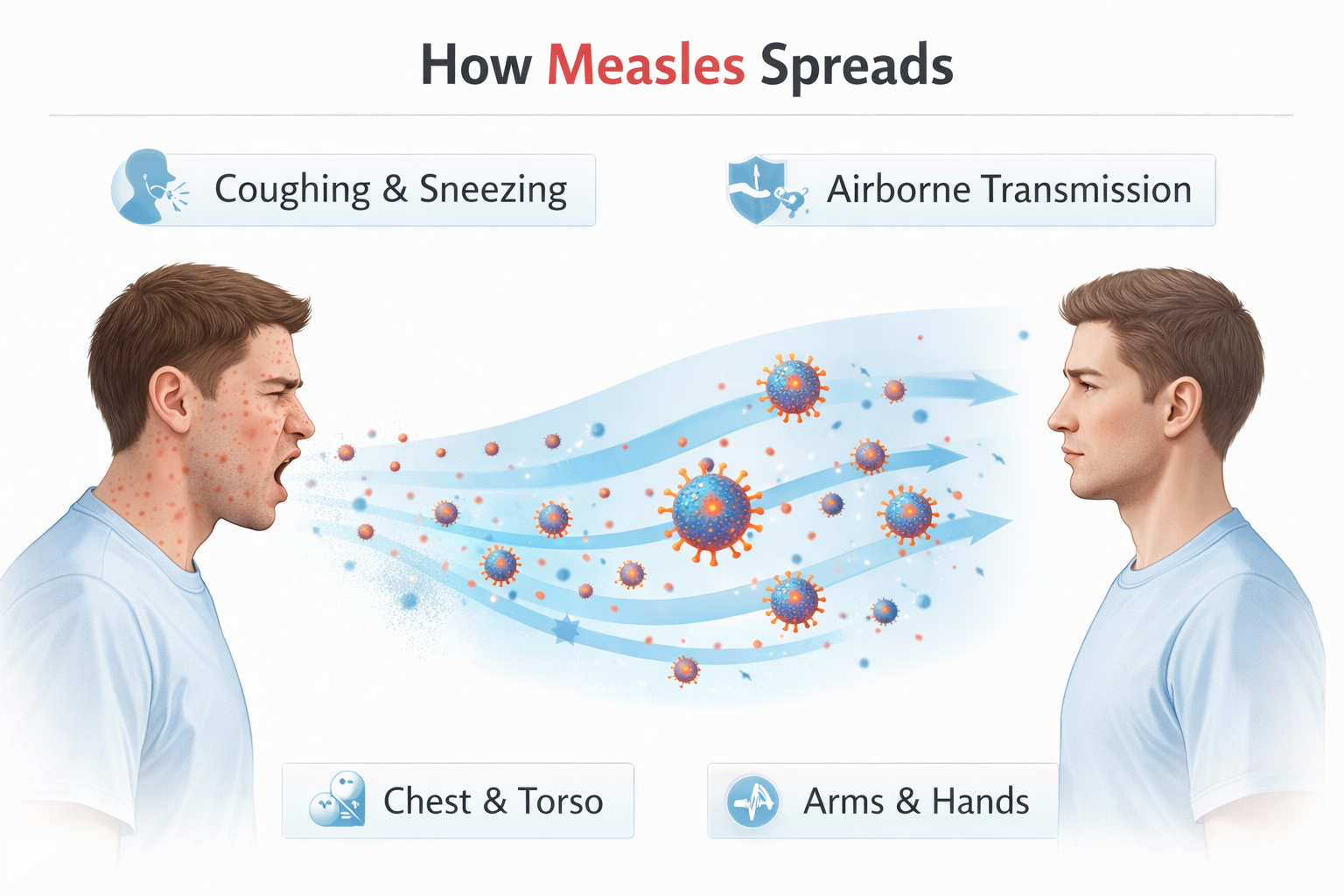
People infected with measles are contagious from four days before the rash appears until four days after the rash develops.
Symptoms of Measles
Symptoms usually appear one to two weeks after exposure.
Early Symptoms
- High fever
- Runny nose
- Persistent cough
- Red watery eyes
- Sore throat
- Fatigue
Koplik Spots
A unique early sign of measles is the appearance of tiny white spots inside the mouth known as Koplik spots.
These spots typically appear two to three days before the rash develops.
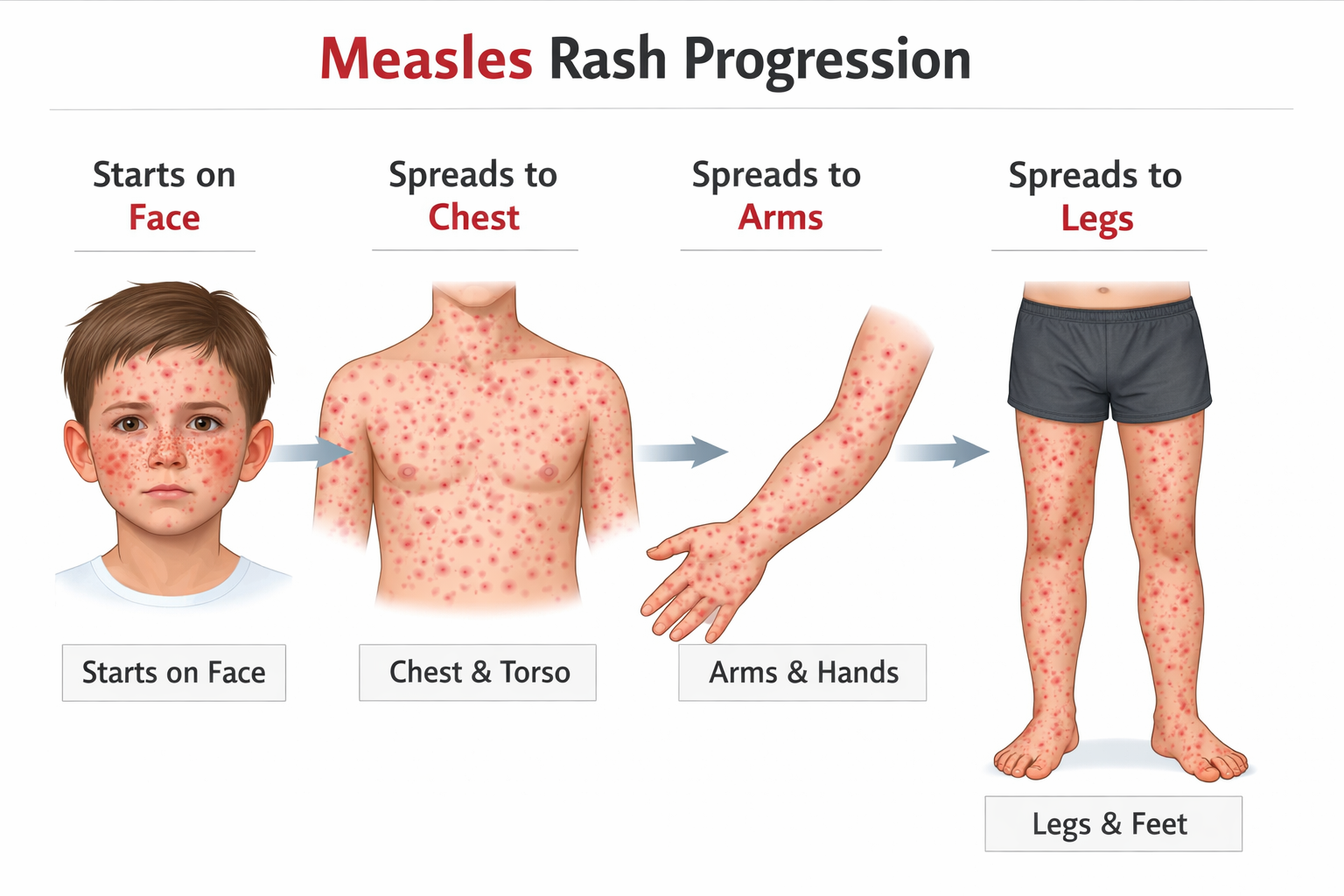
The Measles Rash
The characteristic rash begins at the hairline and spreads downward across the body.
The rash typically:
- Starts on the face
- Spreads to the neck and chest
- Extends to arms, legs, and feet
The rash usually fades after about five days.
Diagnosis and Tests
Doctors diagnose measles using both clinical symptoms and laboratory tests.
Step-by-Step Diagnosis
Medical History
Doctors review vaccination records and possible exposure.
Physical Examination
Physicians look for fever, rash, and Koplik spots.
Laboratory Testing
- Blood tests detecting measles antibodies
- PCR testing to identify the virus
- Throat or nasal swab samples
How Is Measles Treated? Management and Treatment
There is no specific antiviral cure for measles. Treatment focuses on relieving symptoms and preventing complications.
Step-by-Step Treatment Guide
Rest
Rest allows the immune system to fight the infection.
Hydration
Drinking fluids prevents dehydration.
Fever Management
Medications such as acetaminophen or ibuprofen may reduce fever.
Vitamin A Supplementation
Vitamin A is recommended for children with measles because it reduces complications.
Isolation
Patients should avoid contact with others to prevent spreading the virus.
Expert Insights: Best Ways to Prevent Measles
Vaccination remains the most effective protection against measles.
The MMR vaccine protects against:
Two doses of the vaccine are approximately 97% effective in preventing infection.
Action Plan: How to Protect Yourself and Your Family
Follow this step-by-step action plan to reduce the risk of measles:
- Ensure vaccinations are up to date
- Recognize early symptoms
- Seek medical advice quickly
- Avoid contact with infected individuals
- Maintain strong immune health
Final Thoughts
The history of measles shows how far medicine has progressed.
From a disease described by physicians over a thousand years ago to modern vaccines that prevent millions of infections, measles represents one of the greatest stories of medical progress.
Understanding measles—its symptoms, causes, and prevention—helps protect not only individuals but entire communities.
With awareness, vaccination, and responsible health practices, measles outbreaks can be prevented and lives can be saved.