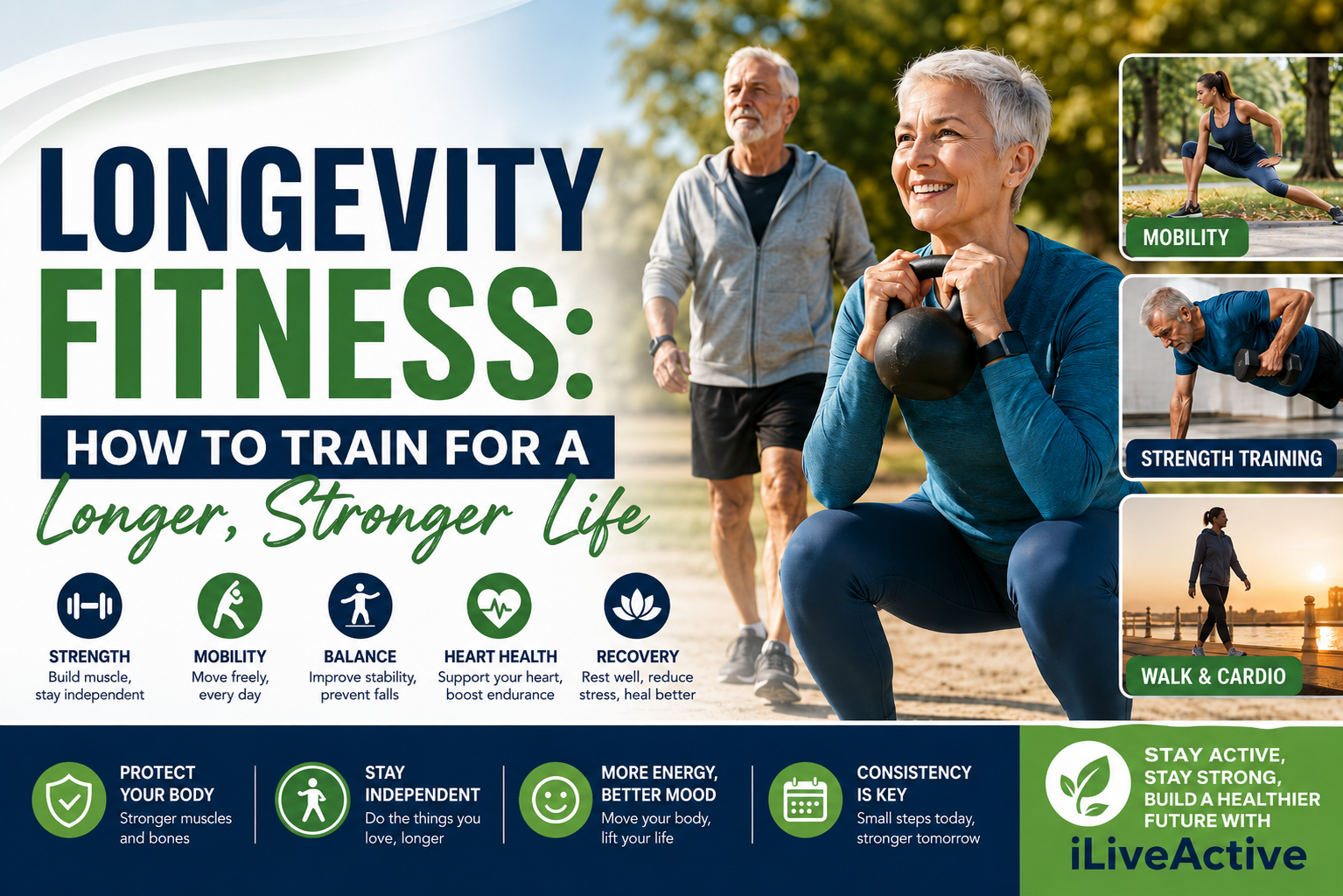
Longevity is becoming one of the biggest health and wellness trends of our time. But the real conversation is no longer just about living longer. It is about living better.
People do not only want more years. They want more strong years, more independent years, more energetic years, and more years where they can move comfortably, travel, play with grandchildren, work, enjoy hobbies, and take care of themselves with confidence.
That is where longevity fitness comes in.
Longevity fitness is not about extreme workouts, punishing exercise routines, or training only for appearance. It is about building a body that supports you for decades. It focuses on strength, mobility, balance, cardiovascular health, bone density, metabolic health, recovery, and daily movement.
In other words, longevity fitness is training for life.
Health and wellness experts are increasingly shifting the conversation from lifespan to healthspan. The Global Wellness Summit’s 2026 trends report highlights longevity moving in new directions, with a stronger focus on healthspan and more human, sustainable approaches rather than extreme optimization.
For iLiveActive readers, this matters because staying active is one of the most powerful choices you can make for healthy aging. Whether you are in your 30s, 40s, 50s, 60s, 70s, or beyond, the goal is the same: build a body that can move, lift, balance, recover, and keep going.
Why Longevity Is Becoming a Major Health Trend
Longevity has become a major healthcare and wellness trend because people are thinking differently about aging.
In the past, aging was often treated as something to simply accept. Today, more people are asking better questions:
- How can I stay strong as I age?
- How can I protect my joints?
- How can I prevent falls?
- How can I maintain muscle?
- How can I keep my heart healthy?
- How can I stay independent longer?
- How can I have more energy in daily life?
This shift is happening because people are realizing that aging well is not only about medicine. It is also about lifestyle. Exercise, nutrition, sleep, stress management, social connection, and daily habits all play an important role in how we age.
Physical activity guidelines from major health organizations consistently recommend a combination of aerobic exercise, strength training, and balance-focused activity for older adults. The CDC states that adults 65 and older need at least 150 minutes of moderate-intensity aerobic activity per week, at least two days of muscle-strengthening activity, and activities that improve balance.
The World Health Organization also recommends regular physical activity for older adults, including 150 to 300 minutes of moderate-intensity aerobic activity per week, plus muscle-strengthening activities and balance training for older adults as part of a complete healthy-aging approach.
The message is clear: movement is not optional for healthy aging. It is one of the foundations of a longer, stronger life.
Lifespan vs. Healthspan: What Is the Difference?
To understand longevity fitness, it is important to understand the difference between lifespan and healthspan.
Lifespan means how long you live.
Healthspan means how many of those years you live with good health, mobility, independence, strength, and quality of life.
A person may live to 90, but if the last 20 years are filled with weakness, poor mobility, chronic pain, low energy, and loss of independence, that is not the kind of longevity most people want.
The real goal is to extend healthspan.
Longevity fitness focuses on helping you maintain function for as long as possible. That means being able to:
- Walk without difficulty
- Climb stairs
- Carry groceries
- Get up from the floor
- Lift bags safely
- Maintain balance
- Travel comfortably
- Avoid preventable falls
- Stay active with family
- Keep muscle and bone strength
- Protect heart and metabolic health
This is why longevity fitness is different from short-term fitness trends. It is not about doing a 30-day challenge and stopping. It is about building sustainable movement habits that support your body for life.
Why Muscle Is a Longevity Asset
Muscle is one of the most important assets for healthy aging.
Many people think of muscle only in terms of appearance, but muscle is much more than that. Muscle helps you move, stand, balance, lift, stabilize joints, regulate blood sugar, and maintain independence.
As people age, they naturally tend to lose muscle mass and strength if they do not actively train. This loss can make daily activities harder. It can affect posture, mobility, metabolism, balance, and overall confidence.
Strength training can help preserve and rebuild muscle. Research on resistance training in older adults shows that strength training can improve muscle strength through increases in muscle mass and improved neuromuscular function. The National Strength and Conditioning Association has also emphasized that resistance training programs can be adapted for older adults, including people with frailty, mobility limitations, cognitive impairment, or chronic conditions.
That is powerful because it means strength training is not only for young athletes. It is for anyone who wants to age with more independence.
Muscle supports longevity because it helps with:
- Daily strength
- Joint protection
- Posture
- Balance
- Metabolism
- Insulin sensitivity
- Bone loading
- Fall prevention
- Functional independence
A strong body is not just a fitness goal. It is a longevity strategy.
Strength Training for Healthy Aging
Strength training is one of the most important parts of longevity fitness.
It does not mean you need to lift extremely heavy weights or train like a bodybuilder. It means you need to challenge your muscles regularly so they stay strong.
Strength training can include:
- Bodyweight exercises
- Resistance bands
- Dumbbells
- Kettlebells
- Weight machines
- Cable machines
- Functional movements
- Pilates-based strength work
- Chair-based strength exercises for beginners
The key is progressive challenge. Your muscles need a reason to stay strong. If you never lift, push, pull, squat, or carry anything challenging, your body gradually adapts to doing less.
Important Strength Movements for Longevity
A good longevity fitness program should include movement patterns that support daily life.
Squat Pattern
This helps with sitting, standing, climbing stairs, and lower-body strength.
Examples:
- Chair squats
- Bodyweight squats
- Goblet squats
- Sit-to-stand exercises
Hinge Pattern
This helps with bending, picking things up, and protecting the back.
Examples:
- Hip hinges
- Glute bridges
- Romanian deadlifts
- Kettlebell deadlifts
Push Pattern
This helps with upper-body strength.
Examples:
- Wall push-ups
- Incline push-ups
- Dumbbell chest press
- Overhead press
Pull Pattern
This supports posture, shoulder health, and back strength.
Examples:
- Resistance band rows
- Cable rows
- Dumbbell rows
- Lat pulldowns
Carry Pattern
This builds grip strength, core stability, and real-world strength.
Examples:
- Farmer’s carries
- Suitcase carries
- Grocery-bag carries
Core Stability
Core training helps protect the spine and improve balance.
Examples:
- Dead bugs
- Bird dogs
- Planks
- Side planks
- Pallof presses
For most adults, two to three strength training sessions per week is a strong starting point. The CDC and ACSM both recommend muscle-strengthening activities at least two days per week for adults.
Mobility and Flexibility for Daily Independence
Strength is essential, but strength without mobility can feel stiff and limited.
Mobility is your ability to move joints through a healthy range of motion with control. Flexibility is the ability of muscles and tissues to lengthen. Both are important for healthy aging.
Mobility and flexibility help with:
- Reaching overhead
- Turning your neck and spine
- Walking comfortably
- Getting in and out of a car
- Bending down
- Climbing stairs
- Maintaining posture
- Reducing stiffness
- Moving with confidence
Many people lose mobility gradually because of prolonged sitting, repetitive positions, low activity, injuries, or lack of movement variety. The body adapts to what it does most often. If you spend most of the day seated, your hips, hamstrings, shoulders, and spine may become stiff.
Longevity fitness should include regular mobility work.
Helpful Mobility Exercises
Try adding these movements several times per week:
- Hip circles
- Ankle circles
- Cat-cow stretches
- Thoracic rotations
- Shoulder circles
- World’s greatest stretch
- Hamstring stretches
- Calf stretches
- Chest openers
- Neck mobility
- Deep breathing with gentle movement
The goal is not to force the body into extreme positions. The goal is to maintain comfortable, useful movement for daily life.
A few minutes of mobility work each day can make a big difference over time.
Balance Training to Reduce Fall Risk
Balance training is one of the most overlooked parts of fitness, but it becomes increasingly important with age.
Falls can have serious consequences, especially for older adults. A fall can lead to fractures, fear of movement, reduced independence, and long recovery periods. That is why balance training is a core part of longevity fitness.
The CDC specifically recommends balance-improving activities for adults 65 and older. Healthdirect Australia also notes that older adults should aim for a mix of aerobic, strength, flexibility, and balance exercises to support health and independence.
Balance is not only about standing on one leg. It depends on strength, vision, inner-ear function, joint awareness, foot strength, core stability, and reaction time.
Simple Balance Exercises
Here are beginner-friendly balance exercises:
- Standing on one leg
- Heel-to-toe walking
- Side steps
- Standing marches
- Calf raises
- Toe raises
- Sit-to-stand practice
- Step-ups
- Tai chi-inspired movements
- Slow controlled lunges
Start near a wall, chair, or counter for support. Safety comes first.
Balance training is most effective when practiced consistently. Even five minutes a day can help improve confidence and body awareness.
Walking and Low-Impact Cardio for Heart Health
Walking may be one of the most underrated longevity exercises.
It is simple, accessible, low impact, and powerful for overall health. Walking supports cardiovascular fitness, circulation, mood, joint movement, blood sugar regulation, weight management, and daily energy.
Low-impact cardio is especially valuable because it allows people to build endurance without excessive joint stress.
Examples include:
- Walking
- Cycling
- Swimming
- Water aerobics
- Elliptical training
- Low-impact dance
- Rowing
- Light hiking
- Step walking
- Marching in place
The WHO recommends at least 150 to 300 minutes of moderate-intensity aerobic activity per week for adults, or 75 to 150 minutes of vigorous activity. For additional health benefits, adults can increase moderate-intensity physical activity toward 300 minutes per week.
A recent cardiovascular fitness study reported in 2026 also reinforces the importance of regular weekly movement, with researchers noting that meeting the common 150-minute activity guideline was associated with reduced cardiovascular risk across fitness levels.
The best cardio routine is the one you can repeat consistently.
For many adults, that means walking most days, adding low-impact cardio two or three times per week, and gradually increasing duration or intensity.
Metabolic Health and Longevity Fitness
Longevity fitness is also important for metabolic health.
Metabolic health refers to how well your body manages blood sugar, insulin, cholesterol, blood pressure, energy use, and body composition. Poor metabolic health can increase the risk of many chronic conditions.
Exercise supports metabolic health in several ways.
Strength training increases muscle, and muscle helps the body use glucose more effectively. Walking after meals can support blood sugar regulation. Cardio improves heart and vascular function. Mobility and daily movement reduce the negative effects of sitting too long.
A good longevity fitness plan should not only focus on calories burned. It should focus on building a body that handles energy well.
Helpful habits include:
- Walking daily
- Strength training two to three times per week
- Breaking up long sitting periods
- Doing light movement after meals
- Choosing low-impact cardio
- Getting enough sleep
- Managing stress
- Eating protein-rich meals
- Staying hydrated
Fitness and metabolism are deeply connected. The more active and strong your body is, the better prepared it is to age with energy.
Recovery, Sleep, and Stress Management
Longevity fitness is not only about exercise. Recovery matters too.
As people age, recovery becomes more important because the body needs time to repair, adapt, and restore. Training hard without enough sleep, hydration, nutrition, or rest can increase fatigue and injury risk.
A smart longevity fitness routine includes recovery by design.
Sleep
Sleep supports muscle repair, hormone regulation, brain health, immune function, and energy. Poor sleep can make exercise feel harder and recovery slower.
Rest Days
Rest days do not mean doing nothing. They can include walking, stretching, mobility, light yoga, or breathing exercises.
Stress Management
Chronic stress can affect sleep, recovery, appetite, blood pressure, and motivation. Gentle movement, breathing practices, meditation, time outdoors, and social connection can all support stress reduction.
Mobility and Soft Movement
Low-impact movement can improve circulation and reduce stiffness without overloading the body.
Protein and Nutrition
Muscles need protein and nutrients to repair. Adults focused on healthy aging should pay attention to protein intake, hydration, and balanced meals.
A longevity routine should leave you feeling stronger over time, not constantly exhausted.
A Simple Weekly Longevity Fitness Plan
Here is a practical weekly plan for adults who want to build strength, mobility, balance, and cardiovascular fitness.
This plan can be adjusted based on age, fitness level, medical conditions, and personal goals. Anyone with health concerns or who has been inactive for a long time should consult a healthcare professional before starting a new exercise program.
Monday: Strength + Mobility
Strength session:
- Chair squats or goblet squats
- Resistance band rows
- Incline push-ups
- Glute bridges
- Farmer’s carries
- Dead bugs
Finish with 5 to 10 minutes of mobility:
- Hip circles
- Shoulder circles
- Hamstring stretch
- Chest opener
Tuesday: Walking + Balance
Walk for 30 minutes at a comfortable pace.
Balance practice:
- Single-leg stand near a wall
- Heel-to-toe walk
- Standing marches
- Calf raises
Wednesday: Low-Impact Cardio + Flexibility
Choose one:
- Cycling
- Swimming
- Elliptical
- Low-impact dance
- Brisk walking
Duration: 25 to 40 minutes.
- Finish with gentle stretching.
Thursday: Strength Training
Strength session:
- Step-ups
- Dumbbell or band rows
- Wall push-ups or chest press
- Hip hinges
- Side planks
- Suitcase carries
Keep the movement controlled and focus on good form.
Friday: Walking + Mobility
Walk for 30 to 45 minutes.
Mobility work:
- Cat-cow
- Thoracic rotations
- Ankle mobility
- Hip flexor stretch
- Neck mobility
- Deep breathing
Saturday: Active Aging Day
Choose an enjoyable activity:
- Hiking
- Gardening
- Dancing
- Pickleball
- Yoga
- Pilates
- Swimming
- Long walk with family
- Outdoor cycling
The goal is to make movement part of life, not just a workout.
Sunday: Recovery
Focus on:
- Gentle stretching
- Breathing exercises
- Light walking
- Meal preparation
- Hydration
- Sleep routine
- Relaxation
Recovery helps prepare the body for the next week.
Beginner Modifications
If you are new to fitness, start smaller.
Try:
- 10-minute walks
- Chair squats
- Wall push-ups
- Light resistance bands
- Supported balance exercises
- Gentle stretching
- Two strength sessions per week
Progress slowly. Consistency matters more than intensity at the beginning.
Longevity Fitness After 50
After 50, strength training becomes especially important because muscle and bone preservation become bigger priorities.
Focus on:
- Strength training two to three times weekly
- Walking most days
- Balance practice several times weekly
- Mobility work daily
- Protein intake
- Sleep quality
- Joint-friendly cardio
- Progressive but safe resistance
The goal is not to train like you are 20. The goal is to train in a way that makes the next 20, 30, or 40 years stronger.
Longevity Fitness After 60 and 70
After 60 and 70, movement becomes even more connected to independence.
The most important exercises are the ones that help daily life:
- Sit-to-stand strength
- Step-ups
- Walking endurance
- Balance drills
- Grip strength
- Posture exercises
- Gentle mobility
- Core stability
- Low-impact cardio
Strength training can still be effective in older adults when properly adapted. Resistance training programs can be modified for different ability levels, including people with mobility limitations or chronic conditions.
It is never too late to begin, but it is important to start safely.
Common Mistakes in Longevity Fitness
Mistake 1: Only Doing Cardio
Cardio is important, but it is not enough. Strength training is essential for muscle, bone, metabolism, and independence.
Mistake 2: Ignoring Balance
Many people wait until balance becomes a problem before training it. Balance should be practiced before it declines.
Mistake 3: Training Too Hard Too Soon
Extreme workouts can lead to soreness, frustration, or injury. Longevity fitness should be sustainable.
Mistake 4: Sitting Too Much Outside Workouts
One workout does not erase an entire day of sitting. Try to move regularly throughout the day.
Mistake 5: Skipping Recovery
Rest, sleep, hydration, and nutrition are part of the program.
Mistake 6: Thinking It Is Too Late
It is not too late to improve strength, mobility, balance, and fitness. The body can adapt at many ages.
How to Stay Motivated
Motivation often comes from progress, not perfection.
Instead of focusing only on weight loss or appearance, track functional wins:
- You can climb stairs more easily.
- You can carry groceries without strain.
- You can walk farther.
- You feel steadier.
- You sleep better.
- Your posture improves.
- You have more energy.
- You feel more confident.
These are real signs of longevity fitness.
Set simple goals:
- Walk 20 minutes daily.
- Strength train twice per week.
- Practice balance for five minutes.
- Stretch after waking up.
- Take movement breaks during the day.
- Add one more serving of protein.
- Go to bed 30 minutes earlier.
- Small habits repeated over time create powerful results.
Final Thoughts
Longevity fitness is not about chasing youth. It is about building a stronger future.
The goal is not just to live longer. The goal is to live with more strength, mobility, balance, energy, independence, and confidence.
Exercise supports healthy aging by preserving muscle, strengthening bones, improving balance, supporting heart health, maintaining mobility, improving metabolic health, and helping the body recover from stress. A complete longevity fitness plan includes strength training, walking, flexibility, mobility, low-impact cardio, recovery, sleep, and stress management.
You do not need to start with a perfect program. You simply need to start.
Move your body. Build your strength. Protect your balance. Walk often. Stretch gently. Recover well. Stay consistent.
A longer, stronger life is built one day at a time.
Stay active, stay strong, and build a healthier future with iLiveActive.