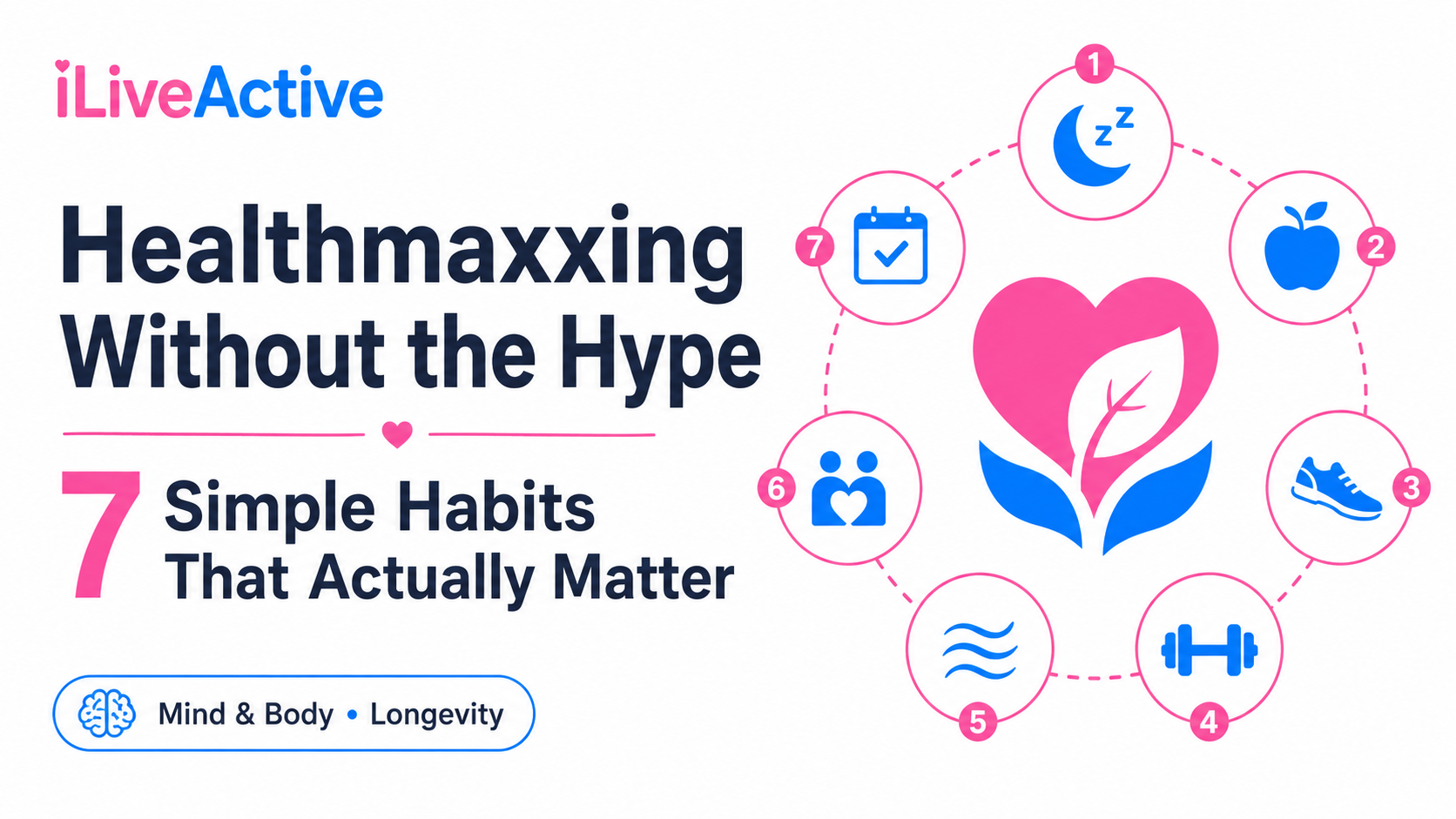
“Healthmaxxing” is a popular way of describing the effort to improve every part of your health—from sleep and nutrition to fitness, focus, and longevity.
The idea can be motivating. The problem is that it can also become overwhelming. Social media often makes good health look like a full-time job involving expensive supplements, complicated routines, constant tracking, and the latest wellness device.
In reality, the habits that support long-term health are usually much simpler. You do not need to optimize every minute of your day. A few consistent choices can make a meaningful difference over time.
Here are seven practical habits worth focusing on.
1. Protect Your Sleep Schedule
Sleep supports energy, concentration, mood, immune function, appetite regulation, and physical recovery. Yet many people focus on supplements and exercise while treating sleep as optional.
A helpful first step is to keep your bedtime and wake-up time reasonably consistent, including on weekends. Your schedule does not need to be perfect. The goal is to give your body a predictable rhythm.
Try creating a short wind-down routine before bed. Lower the lights, reduce stimulating content, and give yourself time to mentally slow down. Keeping the bedroom cool, dark, and quiet may also make sleep easier.
Rather than obsessing over every sleep score from a wearable, pay attention to how rested and functional you feel during the day.
2. Build Meals Around Whole Foods
Healthy eating does not require a rigid diet or a long list of forbidden foods.
A balanced meal can be built around a few basics:
- A source of protein
- Vegetables or fruit
- A high-fiber carbohydrate
- A source of healthy fat
For example, a meal might include lentils, vegetables, brown rice, and yogurt, or grilled fish with potatoes and a salad.
Whole and minimally processed foods generally provide more fiber, vitamins, minerals, and satisfying nutrition than heavily processed alternatives. However, convenience foods can still have a place. The goal is to improve your overall eating pattern—not to make every meal perfect.
3. Walk More Throughout the Day
Walking is one of the simplest forms of physical activity, but its value is easy to underestimate.
A daily walk can support cardiovascular health, mobility, blood sugar management, stress relief, and mental well-being. It can also be easier to maintain than an intense workout program.
You do not need to complete all your movement at once. A ten-minute walk after a meal, a short morning walk, and a few active breaks during the workday can add up.
Step counts can be useful, but they are not a pass-or-fail test. Start from your current activity level and gradually increase your movement in a way that feels realistic.
4. Strengthen Your Muscles Regularly
Muscle strength matters for far more than appearance. It supports posture, balance, joint function, bone health, daily independence, and healthy aging.
Strength training does not always require a gym. Bodyweight squats, wall push-ups, resistance bands, light dumbbells, and simple household movements can all help.
Aim to train the major muscle groups regularly, while giving your body enough time to recover. Good technique matters more than lifting heavy weights.
Anyone who is new to strength training, recovering from an injury, or managing a health condition may benefit from guidance from a qualified fitness or healthcare professional.
5. Manage Stress in Small, Repeatable Ways
Stress cannot always be removed, but it can often be managed more effectively.
You do not need a perfect meditation routine. Small practices can help your nervous system shift out of constant urgency.
Consider trying:
- Slow breathing for two minutes
- A quiet walk without your phone
- Journaling before bed
- Stretching during a work break
- Calling someone you trust
- Spending time outdoors
The best stress-management habit is not necessarily the most impressive one. It is the one you can actually use when life becomes difficult.
Persistent anxiety, low mood, or emotional distress deserves proper support. Self-care habits can be helpful, but they are not a replacement for professional care when it is needed.
6. Maintain Meaningful Social Connections
Health is not only about food, exercise, and medical numbers. Human connection also plays an important role in emotional well-being and quality of life.
Busy schedules can make relationships feel secondary. Consider treating connection as part of your health routine.
Share a meal with family, check in with a friend, join a community group, volunteer, or participate in an activity you enjoy. Even brief, regular contact can feel more supportive than occasional large social events.
The goal is not to become more social than feels natural. It is to avoid becoming unintentionally isolated.
7. Keep Up With Preventive Care
Wellness trends often focus on what you can do alone, but professional healthcare still matters.
Routine checkups, dental care, recommended screenings, vaccinations, and discussions about family history can help identify concerns early. The appropriate schedule depends on your age, medical history, medications, and individual risk factors.
Avoid ordering unnecessary tests simply because they are promoted online. More information is not always more useful, especially when results are difficult to interpret without medical guidance.
A trusted healthcare professional can help you decide which screenings and measurements are relevant to you.
Consistency Matters More Than Optimization
Healthmaxxing does not need to mean tracking every calorie, buying every device, or following a complicated morning routine.
It can simply mean sleeping more consistently, eating nourishing meals, walking often, building strength, managing stress, staying connected, and keeping up with preventive care.
Choose one habit that feels manageable and practice it consistently before adding another. Small improvements may not look dramatic on social media, but they are often the habits that last.
For more practical guidance on everyday wellness, healthy aging, nutrition, and health innovation, explore more articles from iLiveActive or download the iLiveActive app.